6.01.2009

here we go


This from the Manila Times: BRT in the Philippines to cost Php55B for 426 kilometers. (That seems a little pricey to me but at least the idea has found legs.)

Moreso, pilot routes are in the works. I hope they do it right.

The Transportation department is planning to have two pilot routesthe 21-km C-5 (South Luzon Expressway-Commonwealth Avenue in Quezon City) route and the 24-km Edsa-Binangonan (Rizal) routewhich will cost a total of over P6 billion.

The C-5 BRT will have 16 stations while the Edsa-Binangonan BRT, 18 stations.

The estimated cost per kilometer in the construction of the Edsa-Binangonan pilot corridor is P139.07 million and of the C-5, P129.33 million.

The two pilot routes were chosen from 11 potential BRT corridors.

NEDA cited the positive impacts of the BRT system in Bogota, including high level of service at low cost, less boarding time, equal-opportunity access, safety, reduction in some pollutants, efficiency and customer satisfaction, all achieved at a fare of $0.40 and not requiring any subsidies.

The BRT system in Bogot can handle 40,000 passengers per hour.

NEDA said that pedestrian spaces and bike paths will complement the proposed BRT system in the Philippines.

4.20.2009

chicago, a hundred years since

So, if you didn't know it yet, Daniel Burnham created a plan for Manila before he even worked on Chicago, DC or San Francisco. Of course, we decided not to follow through with it.

Urbanophile lists down why the Burnham plan for Chicago was so successful and I think civic and business leaders back home should take notice.

Item #1 is:

It was a private sector, business led initiative. I hear people today moan about the feckless political leadership in their cities. But Chicago wasn't immune from this in the early 20th century. The rest of the civic leadership didn't wait around for the city politicians to get their act together. Rather, the Merchants Club of Chicago (which later merged with the Commercial Club, a still existing organization) stepped in and sponsored the creation of a plan that they saw as critical to overcoming the challenges the city faced at the time and propelling its future growth.

This is very relevant today. Most cities have some corporate/academic vehicle that is often a prime force in local initiatives. This is the logical place for such a civic strategy to be developed today. However, I might suggest that unlike in Burnham's day, having a broader stakeholder base is critical. Thus involving cultural institutions or other non-business groups, plus at least some form of broader community input is essential today. But I still think that it is generally the business community that is the likely sponsor for any plan.
It takes a lot of work but it produced a very powerful vision and a century later, Chicago is still realizing Burnham's plan.

From the balcony outside his war room, Burnham looked down on a thin strip of parkland that hugged Michigan Avenue. Beyond that, rail lines and sprawling freight yards separated the lake from the people. Plumes of smoke from steam engines cast a haze.

Stand on that balcony today and the extraordinary impact of the plan is revealed, from the Michigan Avenue Bridge on the north to the new skyline of condominium towers rising along Roosevelt Road on the south. The scene is one of order, symmetry and power. Navy Pier and the land bridge to the Adler Planetarium reach out like arms embracing the lake.

You are seeing what Burnham saw. Not the cramped, industrial view his eyes took in but the future he envisioned. People stroll where trains once ruled. A harbor teems with sailboats. Crowds gather for music festivals and skaters glide in front of an iconic sculpture that is becoming a symbol of Chicago. Formal gardens and a fountain modeled after Versailles celebrate this monumental meeting place of the Great Lakes and the Great Plains.

If we dare, can we look at Metro Manila today and imagine, just as Burnham did, the city a hundred years later. Can we envision our own future?


4.08.2009

"Our cities are linked and they are learning"

Check out this SlideShare Presentation:

4.07.2009

the street of the future is a livable street


This interactive graphic courtesy of GOOD Magazine.

"It’s easy to forget that our streets are alterable. They weren’t set down by God on the eighth day; they were designed by human beings. Unfortunately, throughout the 20th century, most of the human beings designing our streets were traffic engineers. For the most part, they viewed the city from behind a windshield and saw the street as a problem to be solved for automobiles. The result is the American city that most of us know today: sprawling, traffic-choked, hostile to pedestrians and cyclists, dependent on a vast, never-ending flow of cheap oil, and deeply unsustainable.

Streets can and must be more than just a place for the movement and storage of private motor vehicles. The urban street of the 21st century will be a “complete street,” accommodating pedestrians, cyclists, and transit riders alike. At the Livable Streets Initiative we are helping citizens re-envision streets as great public spaces. Take, for example, the busy intersection of Amsterdam Avenue and West 76th Street in Manhattan."

Yes, we can -Re-imagine Metro Manila's Streets.


3.06.2009

want to reinvent metro manila?


DIYcity: How do you want to reinvent your city?

Twitter bots, aggregators, social software, mobile apps - we use these things more and more in our daily routines to make our lives better. But can we also use them to remake our cities altogether? How can these technologies be applied to transform urban spaces, changing them from the centralized, hard-coded things they are today into finely-tuned, fluid, user-operated systems that are efficient, sustainable and fit for life in the 21st century?

DIYcity is a place where people figure these things out by discussing, then actually building and launching applications that address the problems around them.

Anyone care to start a Metro Manila thread?


Image credit: Brokeness by col_adamson

2.23.2009

business improvement districts


I've advocated for the use of BIDs (Business Improvement Districts) in Metro Manila. Someone just has to write the enabling law.

What's a BID? (Caveat -that links to a Manhattan Institute report on BIDs, and MI is decidedly on right of the political spectrum.)

A BID is an organization of property owners in a commercial district who tax themselves to raise money for neighborhood improvement. Core functions usually include keeping sidewalks and curbs clean, removing graffiti, and patrolling the streets. Once a BID is formed, the assessment is mandatory, collected by the city like any other tax. Unlike any other taxes, however, the city returns the assessment to the BID management for use in the district.

Do they work? Apparently so, according to the Rand Corporation as reported by the LA Times:
In areas as varied as Old Pasadena, Westwood, Hollywood Boulevard and downtown L.A., business and property owners banded together to assess themselves and form umbrella organizations aimed at keeping their areas safe and clean.

The groups, known as business improvement districts, or BIDS, hired private security guards to help patrol their blocks and crews to clean up their sidewalks, as well as lobbying government officials to make other improvements in their area.

There are now more than two dozen such districts in Los Angeles alone, employing that security guard in front of your favorite downtown eatery and the woman sweeping the sidewalk near your stylist's trendy digs.

In the first comprehensive study of L.A.'s business improvement districts, the Rand Corp. said Thursday that the districts are having a significant effect on crime in their neighborhoods and that areas with such districts have significantly less crime than those without them.

As violent crime has steadily declined by half in the last decade throughout Los Angeles, the report suggests that areas of the city with active business improvement districts have fared even better -- particularly when it comes to robbery and other street crimes.

The districts "are not just gentrification efforts to displace people or the panacea to crime and making people's lives better," said John MacDonald, the leading researcher on the study and a criminology professor at the University of Pennsylvania. "These districts make a place not such an attractive place for crimes of opportunity such as robbery."

There are social issues that would need to be addressed but BIDs could go a long way because:
BIDs have unleashed an enormous amount of private sector creativity towards the solution of public problems. Philadelphia, for example, dubbed “Filthadelphia” by local wags, had been brought to its knees in the 1980s by massive deficits and intractable municipal unions. Cyclones of trash commanded the sidewalks. Now, its historic downtown is clean and orderly, thanks to the Center City business improvement district, which steam cleans the sidewalks every night and sweeps them continuously during the day. Local business activity has increased markedly. Baltimore’s downtown business leaders have dispelled the area’s reputation for crime with roving patrols of uniformed “ambassadors,” who assist tourists and discourage panhandlers. And New York City’s 34 BIDs can claim considerable responsibility for turning around once squalid neighborhoods—from Times Square to East Williamsburg, Brooklyn—and making them safe and attractive for shoppers and pedestrians.

...BIDs have returned to an earlier set of values regarding public space. They understand that simple things—such as keeping sidewalks clean and safe—matter enormously to the urban quality of life. A city that has lost the will to control allegedly “minor” offenses such as trash and graffiti only invites further disorder.

And people are voting with their feet in favor of BID values. Downtown shoppers are rediscovering the pleasures of city strolling; property values in some of the most successful BIDs are rising. (MI)


2.03.2009

bbc's bicycle diaries


Great podcast series on bicycles (and cities) from the BBC:

This three - part series illustrates how the bicycle is used today and what impact it has on people's lives.

With more than a billion models worldwide, the bicycle has found a place in every society.

Since its invention in 1817 people have redesigned and used the bike for hundreds of different purposes.

From sporting events and policing the streets to sharpening knives and selling ice cream.

Using a lot of leg power, the Bicycle Diaries journeys into three different places around the world to discover the communities and people for whom two wheels are better than four.


  • Part one
    A new bicycle system in Paris, France
  • Part two
    Why cycling matters in Kampala, Uganda
  • Part three
    How biking in New Delhi, India helps the economy


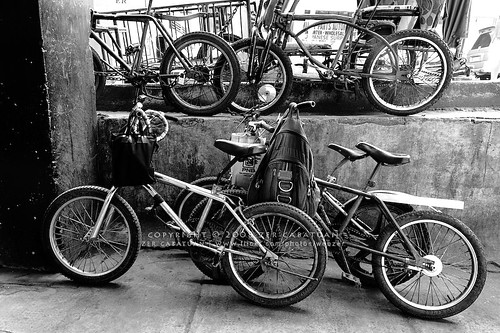
Image credit: Parked Bikes -2492
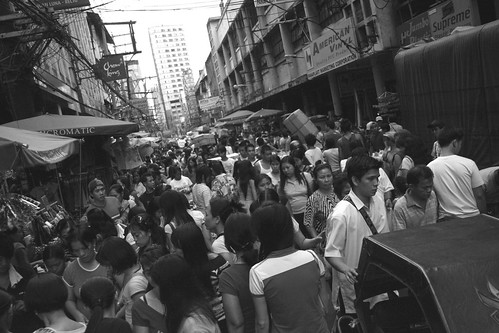
Binondo, Manila
by webzer

RF and Asian Cities

Via MCONET:

Foundation to help Asian cities endure global warming

The Rockefeller Foundation President recently came to Thailand on many occasions, one of which concerned the 70-billion US dollar “Asian Cities Climate Change Resilience Network” project.

According to its President, Dr. Judith Rodin, the Rockefeller Foundation is now planning an experiment to help Asian cities endure global warming instead of stopping it.

Climate change, which has already occurred, will lead to flooding, drought and the water systems in recent health risks like dengue fever.

“We will continue to fund grantees that advocate for the issues that we care deeply about in agricultural productivity and food security in climate change resilience and mitigation in assuring better health for all more heatlh equity,” said Rockefeller Foundation President  Dr. Judith Rodin.

Let alone the foundation’s project, Dr. Rodin added the issues focused on were also dependent on governments to play a key role through their policies and investment.

Meanwhile, main criteria have been set to decide which cities will come under the project, while a final decision on the cities will be made within 2009.

The criteria are governments’ willingness and eagerness to do risk assessment and vulnerability planning and capacity building, while cities predicted to have high growth in urbanisation and those shown to have the greatest vulnerability to occurring climate change also count.

"There’s an ASEAN initiative that is going to link capital cities and we’ll be working closely with that. So this is really an effort to maximise all of these various initiatives and dramatically increase both learning and the capacity," said Dr. Rodin.
 
Dr. Rodin said all of the learning from the experimental cities would be made available to other networks including other cities like a mega city of Bangkok.

Regarding the current world recession’s impact on climate change, Dr. Rodin also voiced her opinion.

"The financial crisis will present a tremendous opportunity because many nations around the world will be investing in economic stimulus packages," said Dr. Rodin.

While the Rockefeller Foundation was working on new innovations to present more opportunity during the economic crisis, Dr. Rodin said, many conversations on economic stimulus packages were now being held, including on jobs, investment, alternative energy and other climate-friendly issues.

With such cooperation from concerned parties, there’s hope for our environment to go hand in hand with our economy. (TNA)


1.15.2009

decongesting manila


This was Econmist Benjie Diokno's latest column in BusinessWorld.

He reports back from the findings of WDR2009 and argues that "Decongesting Manila by creating new government centers in other cities is "ill-advised and a waste of public funds" and echoes the report that says "it makes more sense to increase economic activity in the metropolis rather than to disperse it around in the country."

I totally agree with the report, particularly with this quotable:

"In places urbanizing rapidly, government must put in place, in addition to institutions, connective infrastructure so that the benefits of rising economic density are more widely shared.

"In places, where urbanization has advanced, in addition to institutions and infrastructure, targeted interventions maybe necessary to deal with slums. But these interventions will not work unless institutions for land and basic services are reasonable effective and transport facilities is in place." (-emphasis mine, UDC)


Full text of the article below:

Decongesting Metro Manila is one of the government's top priorities. The idea is to allow people to work within the metropolis while living in nearby provinces. As part of this program, five major departments will be transferred to new government centers that will be developed in different parts of the country. Such moves are ill-advised and a waste of public funds, going by the prescriptions from the World Development Report 2009 (WDR 2009), entitled Reshaping Economic Geography.

Recall that in her 2008 State-of-the-Nation Address (SONA), Mrs. Arroyo said that preparations for the development of new government centers had started through the transfer of various departments to areas outside Metro Manila. These are: Department of Agriculture to Davao City; Department of Public Works and Highways to Bicol; Department of Tourism to Cebu City; Department of Land Reform to Iloilo City; and Department of Transportation and Communication to Clark.

Metro Manila accounts for a third of the Philippines' economic output. But World Bank economists see nothing wrong with this unbalanced growth. They argue that despite having a high population of 12 million and high incidence of poverty, it makes more sense to increase economic activity in the metropolis rather than to disperse it around in the country.

The report's main message is that economic growth will be unbalanced. "To try to spread out economic activity is to discourage it. But development can still be inclusive, in that even people who start their lives far away from economic opportunity can benefit from the growing concentration of wealth in a few places. The way to get both the benefits of uneven growth and inclusive development is through economic integration."

The report clarifies what economic integration is. "It means one thing to integrate rural and urban areas, and slums with other parts of the cities. It means yet another to integrate isolated and well-connected countries. These notions of economic integration are central to three debates in development - urbanization, territorial development, and international integration."

On urbanization, the report recognizes that each area within a nation has a specific geography, but argues that the principles are quite universal.

"In places mostly rural, governments should be as neutral as possible and should establish the institutional foundation for possible urbanization in some places. Good land policies are central, and so are policies to provide basic social services to everyone."

"In places urbanizing rapidly, government must put in place, in addition to institutions, connective infrastructure so that the benefits of rising economic density are more widely shared.

"In places, where urbanization has advanced, in addition to institutions and infrastructure, targeted interventions maybe necessary to deal with slums. But these interventions will not work unless institutions for land and basic services are reasonable effective and transport facilities is in place."

These principles can also reshape the debate on regional development. The report says that: "the tools of geography can identify which places are poor - the lagging areas - and where most of the poor live. Often, the two are not the same, because the poor have the most reason to move from poor places."

Governments, the WDR argues, can adopt policies to integrate areas within nations, while reducing poverty everywhere. Lagging or poor areas have one thing in common: they are economically far from places that are doing well. But the economic geography of lagging areas is not the same. In some countries, lagging areas, such as China, are sparsely populated; in others, lagging areas, such as Brazil, are densely populated but domestic mobility is not difficult; and in others, lagging areas, such as India, are densely populated but people find it difficult to migrate.

In lagging areas that are sparsely populated, "what makes more sense is to provide basic services everywhere, even if it costs more to reach these distant areas. Encouraging mobility of people is the priority, and institutions that make land markets work better and provide security, schools, streets, and sanitation should be the mainstay of integration policy."

In lagging areas that are densely populated but where mobility is not difficult, both institutions and infrastructure to connect these areas to places that are doing well are necessary for economic integration.

But in lagging areas that are densely populated but where mobility is difficult, the report concludes that: "institutions and infrastructure could be complemented by incentives to producers to local in these lagging states. But these incentives should be carefully designed to avoid offsetting the unifying effects of common institutions and connective infrastructure. A promising possibility is providing incentives to agriculture and allied activities that are appropriate for states that are mostly rural."

There are many policy lessons that may be learned from the report's findings and recommendations. First, it casts serious doubts on the government priority plans to decongest Metro Manila which includes transferring the DAR, DPWH, DOT, DAR, and DOTC to cities in Luzon, Visayas, and Mindanao. Abandoning this plan may provide significant benefit for government workers whose families would have to go through severe adjustment costs. But it is a major setback for the land speculators and contractors and suppliers who would have been favored by the transfer.

Second, the results of the study provides strong arguments against proposals to create more special economic zones in various parts of the country. It could be argued that at present there is already an oversupply of such economic zones. While the economic benefits are fuzzy, these economic zones are costly to develop and maintain - and they enlarge the leaks in an already leaky tax.

Third, it puts pressure on policy makers and administrators to be serious about fiscal equalization especially for social services. Support for access to basic education and basic health care should be more or less equal for every Filipino everywhere - whether in rural communities or urban centers, lagging or leading regions.

Fourth, good governance matters. Institutions should be developed at all the national and subnational levels. Fiscal resources should be properly allocated, projects implemented effectively and in a transparent way, and beneficiaries carefully targeted. The prescriptions apply to both the central government and the 45,000 local governments.


Decongestion
Benjamin E. Diokno
BusinessWorld
14 January 2009
BusinessWorld


1.09.2009

mag-aral ka, anak


So, go get your college degree.

But make sure to walk through a park to give your brain a break.

1.07.2009

National Land Use Committee


This came out in BusinessWorld the week before Christmas:

President Gloria Macapagal-Arroyo has included the National Land Use Committee (NLUC) into the National Economic and Development Authority (NEDA) Board to address the land-use issues among government agencies.

The directive was embodied in Executive Order 770 signed by Executive Secretary Eduardo R. Ermita on Dec. 1. It also amended Letter of Instruction 1350 which formed the NLUC in 1983.

"The NLUC, as a NEDA board committee, can advise the President and the NEDA Board on all matters concerning land use and physical planning; and decide and resolve land use policy conflicts between or among national government agencies," the order read.

"There is a need to provide for rational utilization and management of the country's land and other physical resources to ensure their optimum use consistent with the principles of sustainable development," it added.

The President noted that existing laws on land uses such as agrarian reform, protected areas, and ancestral domain and fisheries, forestry and mining "are sector specific and do not address crosscutting land use issues."

"Population growth and numerous development priorities such as food security, settlement development, industry and development, environmental protection and infrastructure continue to compete for limited resources," she added.

The order makes NLUC the highest policy-making body on land use.

The NLUC will be headed by the NEDA director-general and will consist of the secretaries of Environment, Agriculture, Agrarian Reform, Trade and Industry, Public Works, Tourism, Interior and Local Government, Justice, Science and Energy; the chairmen of the Housing and Urban Development Coordinating Council, and Housing and Land Use Regulatory Board, and the National Commission on the Indigenous Peoples; and two private sector representatives.

The NLUC was tasked to promote integrated use of land and physical planning policies and to resolve land use conflicts among agencies.

Alexis Douglas B. Romero
22 December 2008
BusinessWorld


Here's to hoping they understand urbanization.


Image by PHBascon

1.04.2009

inspired by Manila


Above, the Uber Shelter - inspired by Manila.
Dismantled, the Über Shelter looks like a large gray gurney. But this compact pile of aluminum unfolds into a two-story home, complete with lights, stove, porch and a small refrigerator. Rafael Smith, a senior in the industrial design program at Purdue University, designed the Über Shelter for his undergraduate thesis project.

On a vacation in Manila the summer before he began the project, he was shocked by the crushing living conditions of those in poverty; when he got home, he began researching the architecture of shelters around the world. With no previous knowledge of refugee camps, he sought the advice of doctors, policy makers aid workers and a Sudanese refugee he met online.

In his computer-generated design, which was a finalist at the 2008 International Design Excellence Awards for students, Mr. Smith focuses on fixing some of the problems that have plagued large refugee camps. The model is meant to reduce sprawl. Because the shelter can hold two families, one on each floor, the camp size can be reduced by half, and he equips each home with solar-powered electricity. The unit, which unfurls to roughly the size of a truck, is made of lightweight recyclable aluminum, so it can be cheaply transported by car or parachuted in to a disaster area. Mr. Smith plans to refine his design before thinking about patents.


Though I don't recommend overly technical solutions Smith's effort is an example of the growing chorus of design professionals addressing the planet's most pressing needs, moving architecture and design from art into activism.

I am also inspired by indigenous solutions like Elisa Zaldivar's new building material for the poor made from plastic and loofah waste products.


Combining a melting unit, mixer, extruder and cutting unit, the machine can produce – in an hour – a half-metre-wide panel 120 metres long. Depending on the exact mix of plastics and fibres, as well as the thickness of the panel, the composite can have varying amounts of flexibility, weight and insulating qualities, making it adaptable to a variety of construction needs. Colouring can be included in the panel’s plastic mix at the time of fabrication, so there is no need to paint the walls after construction, saving homeowners time and money. Padrós says a panel of even greater strength can be created by using a honeycomb or earthen filler, as well as vegetable matter, to create a sandwich of two panels.

The composite panels are easier to handle than lumber or brick, and much better than conventional materials in an earthquake or other natural catastrophe. Combined with special metal connectors, “it will bend but not break”, Padrós says. And if a house does collapse, he says, someone is much more likely to survive if the walls are lighter in weight than conventional materials. And using the panels will help spare the nation’s forests. “Because we’re using fibres that are completely renewable, we can stop using lumber for construction. That’s very important in Paraguay because we’ve already reduced our original forest to less than ten per cent of Paraguay’s territory,” Zaldívar points out. “We’re running out of trees.”

12.29.2008

by the people, for the people


Success in upgrading slums led by the people who live there:

The Baan Mankong Community Upgrading Program was launched by the Thai government in January 2003, as part of its efforts to address the housing problems of the country’s poorest urban citizens. The program channels government funds, in the form of extremely flexible infrastructure subsidies and soft housing and land loans, directly to poor communities, which collectively plan and carry out improvements to their housing, environment, basic services and tenure security, using budgets which they manage themselves. Instead of delivering housing units to individual poor families or bringing in a few standardized infrastructural improvements, the Baan Mankong Program (which means “Secure housing” in Thai) puts Thailand’s slum communities (and their community networks) at the center of a process of developing long-term, comprehensive solutions to problems of land and housing in Thai cities. Under this unconventional program, which is being implemented by the Community Organizations Development Institute (a public organization under the Ministry of Social Development and Human Security), poor communities develop their upgrading plans in close collaboration with their local governments, professionals, universities and NGOs.

...

Besides new houses and infrastructure in the community, the canal is also getting a face lift and a brand-new, tree-lined, 6-meter lane along its edge, built partly on the swampy edges where houses used to perch, and partly on land reclaimed by the District Authorities in the canal. This new canal-side walkway will provide access to the communities along the canal and enable fire-trucks to enter the slum in an emergency. Though it will be open to motorbikes and cycles, the community people see this walkway as an important pedestrian amenity, providing space for children to play, people to visit and vending carts to sell their food and wares.


Download the pdf (2.5mb) here (via the Asian Coalition for Housing Rights).


The world’s 10 best commutes


photo by AP


Of course Metro Manila is not on the list - but it would be good to look to these cities for inspiration. And, hey, Mumbai, Chennai and Dakkar are on the list. There's hope because "dense cities perform particularly well ."

Quoteworthy:

The speed of transit not only benefits commuters; it contributes to a city's economic competitiveness. Outsourcing capitals like Chennai, which are heavily reliant on attracting informational technology companies, do well on our list due to the city's high investment rate in projects like the IT highway, and its MSRT mass transit rail system.

"Ease of urban mobility is a prerequisite for business to reach supplies and customers," says Maria Krautzberger, permanent secretary of the Berlin Senate Department for Urban Development. "Cities cannot secure their position in global networks otherwise."

Something for our policy makers and business leaders to think about.

12.03.2008

on my reading list

Sorry folks. New job, new city and new baby (Luna Emilia -born Oct. 13, 2008) have been very demanding so have not had time to post or to answer comments.

In lieu of more nuanced thinking, I throw at you books and events I have been reading or have attended lately.

BOOKS


An utterly original exploration of the world of human waste that will surprise, outrage—and entertain

Produced behind closed doors, disposed of discreetly, and hidden by euphemism, bodily waste is something common to all and as natural as breathing, yet we prefer not to talk about it. But we should—even those of us who take care of our business in pristine, sanitary conditions. For it’s not only in developing countries that human waste is a major public health threat: population growth is taxing even the most advanced sewage systems, and the disease spread by waste kills more people worldwide every year than any other single cause of death. Even in America, 1.95 million people have no access to an indoor toilet. Yet the subject remains unmentionable.

The Big Necessity takes aim at the taboo, revealing everything that matters about how people do—and don’t—deal with their own waste. Moving from the deep underground sewers of Paris, London, and New York—an infrastructure disaster waiting to happen—to an Indian slum where ten toilets are shared by 60,000 people, Rose George stops along the way to explore the potential saviors: China’s five million biogas digesters, which produce energy from waste; the heroes of third world sanitation movements; the inventor of the humble Car Loo; and the U.S. Army’s personal lasers used by soldiers to zap their feces in the field.

With razor-sharp wit and crusading urgency, mixing levity with gravity, Rose George has turned the subject we like to avoid into a cause with the most serious of consequences.


One in every ten people lived in urban areas a century ago. Now, for the first time ever, most people live in cities. By 2050, the United Nations projects, almost three-quarters of the world's population will call urban areas home. The majority of this growth is centered in struggling, developing countries of the Global South, but cities in developed (or Global North) countries face increasingly complex challenges as well.

Around the world, unplanned urban expansion is multiplying slums, overburdening housing, transportation and infrastructure systems, stifling economic growth, and leaving millions vulnerable to new environmental and health threats.

To help manage and plan for this accelerating urbanization, the Rockefeller Foundation convened an exceptional group of urbanists--leading policy makers and government officials, finance experts, urban researchers, members of civil society organizations, and other innovators--for a Global Urban Summit at the Rockefeller Foundation Bellagio Center. This book shares their diverse perspectives, creative approaches, and urgent agenda for harnessing the vast opportunities of urbanization for a better world.


Just as God used words both to create the world and to give us commandments, we too use words for many different purposes. In fact, we use the same language to talk to each other and to talk to God. Can our everyday speech, then, be just as important as the words and prayers we hear from the pulpit? Eugene Peterson unequivocally says "Yes!"

Tell It Slant explores how Jesus used language - he was earthy, not abstract; metaphorical, not dogmatic. His was not a direct language of information or instruction but an indirect, oblique language requiring a participating imagination - "slant" language. In order to witness and teach accurately in Jesus' name, then, it is important for us to use language the way he did.

Peterson's Tell It Slant promises to deepen our understanding of Jesus' words, strengthen our awareness of language as a gift of God, and nurture our efforts to make all of our speech convey a blessing to others.


EVENTS


This ground-breaking symposium has been organized to address the role of urban design in the face of one of the most profound and important challenges facing global society: the need to re-imagine and rethink how cities are designed and organized in a future without the plentiful and abundant oil upon which prosperous urban economies have been built.

The event marks the 50th Anniversary of the 1958 University of Pennsylvania/Rockefeller Foundation “Conference on Urban Design Criticism,” whose participants included Jane Jacobs, Louis Kahn, Kevin Lynch, Ian McHarg, Lewis Mumford, and I.M. Pei. That historic conference helped shape the new field of urban design in the 20th Century. Now, we hope you will participate in this critical exploration of new directions for 21st Century urban design.

The program speaks to the depth and diversity of the challenge with sessions on innovations in the way cities are conceived, adapted, designed, developed, and managed in a post-carbon world. The conference will conclude with a manifesto on educating the next generation of urban designers and how best to equip them for the road ahead.


Rebuilding and Renewing America: Infrastructure Choices in the Great Lakes Megaregion

Freight congestion, aging bridges, insufficient mass transit, brownouts, soaring energy costs, flooding, and polluted waters - all news in recent years, and all partially the results of continued strain on our nation's infrastructure. At the same time, the need for an economic stimulus is greater than ever. The presidential election in November 2008 gives us a fresh opportunity to set a new agenda for infrastructure investment in the Great Lakes megaregion to revive the flagging economy and to compete globally.


Longer letter later.


10.06.2008

where I've been
where I'm going


So tell me, are we way past the point in the life-cycle of blogs where the reader, not having seen a new post in weeks, has decided it's not worth visiting the blog anymore?

I hope not. Then again, you're reading this so maybe I have some ground to stand on.

I've been away for quite a while, and have let the messages pile up on my cyber doorstep. I apologize to those who left their thoughts.

I changed jobs in June and moved cities to boot and that has been quite an adjustment. Add to that, the curse of "saying I will start a series" which, invariably, makes me stumble on posting regularly.


Where I've been

I've been working on physical plans at a much smaller, though just as interesting scale. I felt I needed to get back to my design roots and thought a stint in campus planning would satisfy that need.

But the move also shifted me slightly off my focus of livable cities, and though I kept up with the news - I was not as immersed in it which probably is one of the reasons for the dearth in posts.

Well, all that is about to change...


Where I'm going


Then, the Rockefeller Foundation called. We talked.

Here's more about them:
The work of the Rockefeller Foundation for the 21st Century is to enable 'smart globalization.' It attempts to harness the creative forces of globalization to ensure that the tools and technologies that have significantly improved the human condition in many parts of the world during the past half century are accessible today to more people, more fully, in more places.

The foundation focuses its work on five, interlocking issues and one of them is rapid urbanization.

What do they want to accomplish, particularly in my field? They want to address...
...the risks of accelerating urbanization - shaping efforts in planning, finance, infrastructure, and governance to manage a world in which, for the first time in history, more people live in urban communities than rural ones.
I liked the challenge they posed. They liked what they saw in me. They made an offer and I've accepted. I start work with them in November and will be serving as Associate Director for Urban Development and I'll be working on the challenges of urbanization worldwide.

Let me repeat that, to shake my own disbelief at how I've found a home for my passion.


I will be working to find solutions and shape efforts
in planning, finance, infrastructure, and governance
to manage a world in which, for the first time in history,
more people live in urban communities than rural ones
.


Let me step back and say, "Wow!" Sorry. This is a defining moment for me.

And have I told you how they work?
  • We seek and support work that sparks innovation, fresh approaches to problems and their resolutions.

  • We work across and between disciplines, bridging the public, private, and nonprofit sectors.

  • We bring diverse people and parties together and engage them in meaningful alliances.

  • We search for and work with partners to leverage as many elements as possible to maximize opportunities for success.

  • We work to strengthen individual, institutional, and community capacity — empowering more people in more places to build and maintain better lives and futures.

  • We strive to stay nimble and agile. Almost all of our work is selected because the Foundation sees an opportunity to break a bottleneck, surface a new issue or reframe an old one, take advantage of a current or coming tipping point, or expand a proven solution in concert with others.

  • The Foundation vigorously and regularly measures impact and outcomes. Our initiatives specify clear time frames, identify anticipated results, and require monitoring and evaluation. This does not mean that we expect to solve the world’s thorniest problems overnight. It does mean that Foundation-supported work defines hypotheses, articulates both short- and longer-term objectives, foresees and adapts to changing circumstances, and fully integrates verifiable methods of assessing progress.

Wow!

As they say in the old time world of Komiks, "Abangan ang susunod na kabanata."

9.19.2008

car free streets


Yes, I know. I've been gone for too long.

Hold on. I've got some major news and updates coming up but meanwhile, be inspired by New York and San Francisco's own takes on car free days on major streets.

Tell me why we can't do this in our cities:


from Streetfilms.org

7.07.2008

a little bit better


Jan Gehl, one of the most effective urban planners and urban theorists alive, has this advice about dealing with the seemingly overwhelming challenge of changing our cities:

Take it one step at a time.

Check the video above (a segment from Contested Streets) about the success of Copenhagen. Says Gehl:

It's really wonderful to live in a city where everyday, when you wake up in the morning, you realize that today the city is a little bit better than yesterday.

....

What they've done in this city is they taken little steps every year for forty years and (now) there is a fantastic difference between what it was then and what it is now.

One day at a time. Little steps over decades.

It would be impossible to "solve" Metro Manila overnight. But we can do it over time.


7.06.2008

lupang hinirang*


This, before we talk about how to change a city:


Caring About Places: Thresholds

Good places need to be excellent in many dimensions

They need to be structured so we can remember them,
They need to remind us of important things about our lives,
The need to suggest our positions in a sequence of time; not obsessively
marking the moment, but tracing the strands of decision over time

Good places need to be stimulating, to be forgiving, to be approachable,
to be more than we first think they are.
Good places need to sustain attention,
to invite and reward the interest we show in them,
to capture the curiousity and affections of many,
to draw their energy from diverse sources,
to garner and accept continuing investment.

Good places embody imagination,
Good places result from successive generations of care,
Good places engage the landscape, are inscribed with detail,
Good places take advantage of the capabilities of their time; appropriately and with discretion.
Good places confirm as well as challenge; challenge as well as confirm.

Good places set in motion patterns of social encounter that are constructive;
they are not hermetic
they are not threatening
they allow choices of path and association.

Good places let us see how we could be a part of them;
they have parts that are measurable in human terms --
niches of intimacy, rooms of purpose, spaces of assembly, fields of connection
they register human movement, mask and reveal activity, provide options,
evoke conversation, offer repose.

Good places must be considered at various scales;
they play an evident and welcome part in a larger community, landscape and region
they have elements that help us to place them in memory
they bear traces of the acts of building, gardening, tending, gathering
they are furnished and give comfort
they are a semblance of thought...the most precious of resources

Good places enrich our lives; they are thresholds between what has been
and
what might be.


The last line bears repeating:


Good places enrich our lives;
they are thresholds between what has been
and
what might be.


*lupang hinirang -tag., literally "land beloved"
Image credit: esquinita by Ouij

7.05.2008

hope for the city


I've been on an unintended hiatus from blogging for almost two months. I've moved to a new company and job and a new city and the settling-in has taken time.

Despite my absence from these pages, Manila hasn't been far from my thoughts. Mostly I've been thinking about the comments on this post from Carlos Celdran. Carlos posted a 1938 Andre de la Varre feature on Manila. The video is a must-watch for anyone interested in our city's history.

The camera pans across scenes of Intramuros and Binondo, of Ermita and Quiapo, and captures life in our city at a time of great change -when cars where beginning to take over the streets. Tranvias, calesas, automobiles, horse drawn buses and carabao drawn carts jostle with pedestians for the road. It shows congestion beginning in the streets, bustling commerce, churchgoers and promenaders.

Carlos' title for the post? "Sigh, sigh, sigh" as the film makes it easy to get nostalgic about the Manila we have lost. The comments echo his melancholia.

Kat says:

We've lost so, so much. :-( One hopes that we can rebuild, but it's been 70 years since that video, and over 60 years since the war, yet the deterioration continues. Sigh, again.
Alvin agrees:
"Sigh" indeed. Sad as I am that we may never be able to recapture how Manila looked like then, I'm thankful that these videos that you kindly shared with us give us a clearer portrait of a more genteel, comparatively classier Manila.
Most of the comments expressed a courageous love for the city -but all in the chord of "Our city is terrible now, and it's probably too far gone, but we love it anyway." -Which I admire but it bothers me nonetheless.

The love, heroic and seemingly unrequited, is principal. We must love the ground that raised us if our identity is to be grounded and if we are to grow deep roots.

The pessimistic melancholia, rose-colored glasses about a "genteel" past that may never really have been, and a clouded but determined commitment to hold the city dear despite its corruption, is ultimately self-defeating.

Do we still have hope for our city? Do you think we can still do anything about Manila and our megacity?

My fear is that, even those who profess to love the city, will say no. It is, after all, easy to be pessimistic, there is little that brings hope -and our city's problems seem too complex to find solutions.

But cities are never static. Cities are in constant flux. Buildings go up, and come down. Streets change shape and are rerouted. Properties are abandoned then reclaimed. Mores and fashions change with the generations

Cities change. Understanding how cities change will help us to shape that change. To set a path to sustainability and livability and mitigate the decay.

If you love the city of your birth and life but feel little hope for its future, then I offer the next few posts to you. Cities can change and cities can turn around. There are lessons we can learn from others and I hope to write about them, to teach and more importantly, to inspire.


Quick Links

Notable posts on the metro