Showing posts with label traffic and transportation. Show all posts

3.14.2008

schadenfreude


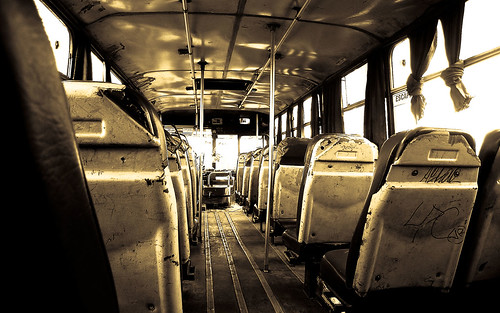
And you thought our traffic was bad. CityFix quotes Time Magazine, which recently named Bangkok The Capital of Gridlock.

CityFix says that the author explained just how bad traffic can get in the Thai capital:

“Police don’t consider traffic bad until a car is stationary for at least an hour. Really bad is two hours.”
And they proceed to cite how the article relates traffic to a myriad of problems, including:

The human side: “Traffic in Thailand’s capital snarls with such ferocity that hundreds of women over the past few years have been forced to give birth in cars.” Police are now trained in midwifery, [Hannah Beech] reports.

The economic side: “More than $1 billion in productivity is lost every year to traffic jams.”

The environmental side: In the 1970’s Bangkok cemented over canals to build more streets for the growing number of cars. “…the declining number of canals, which once served as reservoirs for rain, means that substantial portions of the city flood during the five-month-long wet season. The rising water invariably short-circuits traffic lights, turning intersections into free-for-alls.”
So be grateful that things are not that bad in our megacity. But realize we are headed that way if we continue to prioritize cars over people. We really need efficient public transportation.

And if you have some time on your hands and are prepared to get caught up with online tweaking, go learn about traffic patterns and how traffic jams form via this nifty java-based traffic simulator (via WorldChanging).

Try tweaking the speed limits vs. traffic flow, you'll see how slowing down the traffic actually allows the roads to absorb more vehicles and allows traffic to flow smoother.

(Except it doesn't let you control the number of lanes otherwise you can see how adding road capacity doesn't actually lead to smoother traffic.)


Photo by pchweat via TheCityFix

3.13.2008

getting better public transit in metro manila (part 4)

Mobilizing the political will
to improve public transit in Metro Manila
Part 3: Divide and Conquer

This is part four of a series on how to improve public transit in Metro Manila.

Reviewing again the previous posts:

Step One is to change the frame. Improving public transit is not about decongesting traffic. It is about social justice.

Step Two is to show an alternative vision. Discussing what is wrong about the status quo will not bring change by itself. We have to show what is possible.


Step Three is to build a winning political coalition. A political coalition that will shepherd the change through the political process, and bring political pressure to bear to convince the policy wonks and sway the elected officials.

"Winning" presumes a political contest - a battle, and so we cannot win unless we win over or defeat the opposition which brings us to:

Step Four, Dividing and Conquering the Opposition.

Sun Tzu exhorts us to "know your enemy," so the first question is, "Who would be opposed to more efficient public transportation in Metro Manila?"

The answer, of course, is no one.

More so if the premise is social justice. What politically-sane person in the Philippines would stand against something that is about efficiency, serves the public and is pro-poor?

But it would be the height of naivete to think that there would be no opposition. There will be, but their opposition will stand on issues NOT diametrically opposed to efficiency and social justice.

We need to know their interests, issues and goals and use the same to gain leverage for our agenda.

There will be two types of opposition: organized and not. And that nomenclature is split further down to groups who are influential or not.

The biggest, most visible threat would be from organized and influential opposition, which in my book will likely be the Operators and Drivers Associations of the present public transport services (BODAs, JODAs and TODAs). They have, after all, recently and successfully flexed their muscles (giving, what R.O./Y.R. calls Manila's Extreme Sport, a day long uptick in degree of difficulty -though Enrique claims he found no real effect). They also have a long history of protest action.

But as organized as the ODAs are, they are in no way monolithic. To succeed in breaking the opposition, we have to look at the internal faultlines and use their interest to win adherents over to our side.

Drivers, above all, want a predictable income. Under the boundary system, fluctuations in fuel prices, uneven fines, capricious law enforcement and traffic and traffic congestion affects their take home income. Any system that smooths out those fluctuations - that gives them steady income would be preferable.

Operators, meanwhile, want to maximize their profits. As businessmen, they will appreciate a system that provides incentives to their investments.

One other note, the current free-wheeling public transport ecosystem provides an entrepreneurial route from driver, to small operator, to large operator (or transport consortium). A better public transit system can win adherents if it answers those concerns.

The Bus Rapid Transit system, as implemented in many cities, offers viable solutions to each of these concerns.

First of, the dedicated-lane, bus priority traffic system automatically eliminates the congestion and capricious law enforcement concerns of the drivers.

Also, unlike capital intensive Light or Heavy Rail systems, BRT systems provide a pathway for participation for existing transport providers. Drivers and smaller operators can be encouraged to form cooperatives to bid for and to run the services of the BRT. Large consortiums can easily transition and also provides services. Take the example of Mexico's MetroBus, where 70% of the service is run by companies and cooperatives from the ranks of the former drivers and operators of the minibus services that the BRT system replaced.

Becoming service providers for the BRT, under a formalized enterprise, will allow drivers to shift into formal salaries , moving them away the insecurity of the boundary system. They will also have the benefits of formal employments, such as health insurance and social security.

We can also mandate employee ownership of the service firms so that the drivers earn more than their salaries, but also partake of the profits. Their livelihoods will also not be tied down to the fare rates, but their extra income (share of the profits) will be linked to the efficiency of the service.

A properly designed BRT policy and investment program will move small operators from single proprietorships into medium sized business enterprises. We can provide the capital and tax incentives -for example, by having the government buy and own the buses and leasing them back to the operators to reduce the operator's asset risks. The system can professionalize the current large consortiums, encouraging better corporate management.

A properly designed BRT policy will break the ranks of the ODAs and will likely appeal to majority of the drivers and will draw quite a few of the entrepreneurs.

Other opposition

The only possible opposition left will be the companies with vested interests in large infrastructure projects along with politicians who earn kickbacks from these major investments.

They will argue that fixed rail systems are more efficient but their influence can be neutralized by questioning their vested interests. So, too, with politicians who would stand on their side.

Imagine a politician who is not only labelled "anti-poor" for standing against the social justice issues of a more efficient public transport system, but that they could also be questioned for supporting large investments - as having vested interests.

The final other possible group would be an organized motorist group, which presently does not exist as a viable political force, but it is foreseeable that they could coalesce into a front that can wield some influence. Their main concern would be the traffic consequences of appropriating a lane for the BRT, but that easily be traded of with the removal of undisciplined PUV behavior and by arguing that more efficient public transit will actually reduce car use -thereby freeing up the road for more devoted motorists.

If we frame the BRT proposition correctly, and wield the right political levers, we can easily neutralize the opposition listed above.


Next up: Making it work, the mechanics
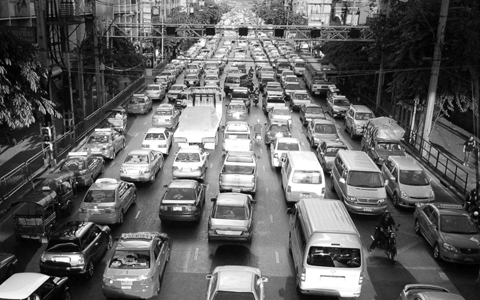


Image credit: Our Direction by B Tal

2.26.2008

if you want to know more about brt

All About Bus Rapid Transit


This one's for the great folks over at the Philippine Forums of Skyscraper City who are discussing how we put up bus rapid transit in our cities:

The Tri-State Transportation Campaign has a great online resource on Bus Rapid Transit -what it looks like, how it works (in urban and suburban settings). It's a very concise introduction to BRT systems and links to tons of resources.

If it's any comfort, the TSTC is also trying to get BRT implemented and expanded in the New York-New Jersey metropolitan area and are working to build up the political will to improve public transit in their megacity.


With a hat tip to Streetsblog.

2.25.2008

getting better public transit in metro manila (part 3)


Mobilizing the political will
to improve public transit in Metro Manila
Part 3: Building a winning coalition

This is part three of a series on how to improve public transit in Metro Manila.

To review where we have been:

Step One is to change the frame. Improving public transit is not about decongesting traffic. It is about social justice.

Step Two is to show an alternative vision. Discussing what is wrong about the status quo will not bring change by itself. We have to show what is possible.
This brings us to:

Step Three: We need to build a winning political coalition
.


Politics often carries a negative connotation but at its root, politics is about the art and science of influencing and shaping public policy and changing policy is about shepherding the proposed changes through the political and policy formation process. It requires the shaping of public opinion, mobilizing that opinion into a political force and then bringing the appropriate political forces to bear at the right points in the process.

Effecting policy changes are often long slogs with victory going to those who can cobble, stable and effective coalitions. Miracle moments (something I'm afraid we have become addicted to) are rare and when they do occur, it usually just results in changes in leadership rather than substantive changes in policy. The change will rarely be lead by policy wonks or elected officials -rather, organized groups must bring political pressure to bear to get the policy wonks to rethink policy and the elected officials to support the change.

Mobilizing the political will to improve public transit in Metro Manila means building and mobilizing a winning coalition.

Who should be in the coalition?

The following groups should be natural core members of this coalition:

1) URBAN POOR: Ideally there should be a commuters union organized and powered by users of public transport. Since there is none, then the urban poor groups should take their place. The urban poor is the sector most dependent on public transit to function in the city and because improving public transit is a social justice issue, then this should be on top of the agenda of advocates for the poor.

2) THE CHURCH/FAITH-BASED GROUPS: Because it is a social justice issue, then the religious groups should also be in the coalition and should be working actively to address that inequity

3) LABOR UNIONS: Workers should also have a dog in the race if inefficient public transit is a bane to families of laborers.

The following groups should be strongly supportive:

4) EMPLOYERS CONFEDERATION and CHAMBERS OF COMMERCE: as inefficient public transit directly effects worker productivity. It also affects the marketability of the city as an investment destination. - More efficient public transit increases productivity and reduces the stress on workers. (These groups can also line up behind the social justice banner.)

I can think of many more groups that can have a natural affinity to this coalition, but i'll stay with this list for now. I'll take any suggestions you might have.

The operational word, of course, is "winning" and it will not be enough to cobble this coalition. The coalition must also effectively neutralize the opposition. And that will be the topic of my next post:

Part 3: Dividing and conquering the opposition


Image credit: Drivers wanted by davefitch

2.13.2008

getting better public transit in metro manila (part 2)


Mobilizing the political will
to improve public transit in Metro Manila
Part 2: A promise of what is possible


So, first we have to change the frame of the conversation: from congestion to social justice.

The consequence of a bad public transport system is not bad traffic (alone) but a fundamental inequity -where those who cannot afford cars or cannot afford to take cars everyday pay a greater share of their household income and pay a greater penalty in time.

A bad public transport system is inequitable. And it is also inefficient.

We need to get better public transport not because we want to get rid of traffic congestion* -but because we want a transport system that does not favor the rich over the poor and the middle class. We want it because we want parents to spend more time with their children and we want students to have more time to study.


The next thing

The next thing we have to do is to provide an alternative vision of what can be.

You cannot change anything by simply complaining about it or pointing out what is wrong. We do not need any more black hats to tell us why something does not work when we know it is not working. We need to see what will work.

You can only inspire and motivate people to change if you show them what can be.

This is where the success of Bogota, Curitiba, Mexico and Jakarta comes in. We don't have to reinvent the wheel. There are many, many successful examples of bus rapid transit projects.

These projects are successful not only in terms of efficiency, but also in terms of economy and democratic participation.

Unlike massive light rail projects, bus rapid transit is:
  • cheaper (at just 1/5 to 1/3 the cost per kilometer vs. fixed rail)
  • cheaper to operate (no substations, no high maintenance infrastructure)
  • is more flexible (if you design the stations right, you can have service overlaps)
  • faster to roll out (transjakarta started in 2004 and will have a total length of 159 kilometers by the end of the decade)
  • is more participative (you can ask existing bus operators and drivers to bid to operate the buses -compare that to their options when we go with expensive fixed rail infra)
We need to invite people from these cities to come and talk about their success. We need to show videos of how BRT works and do TV and magazine reports on our transportation options. We need to show the best practices and the best solutions other mega cities are already exploring,

We need to talk about BRT and other alternative transportation systems (like bicycle networks, and bike rental systems). We need to get everyone to ask:

Why not?
and
So why can we do that here?


Up next, Part 3: Building a winning coalition


*BTW, next time someone says we need to ---take your choice:
  • widen roads,
  • build flyovers,
  • discipline the driver
  • deploy more traffic cops
  • buy a new computerized traffic signal system or
  • build new roads
--to eliminate traffic congestion, challenge them to name ANY CITY in the world that has eliminated traffic congestion by doing any of those actions. I guarantee you, NOT ONE city or region or metropolis in the world has has succeeded using any of those options.

NOT ONE.


There is only ONE PROVEN method to reduce traffic congestion -and that's congestion pricing.

It's been proven in Singapore. It has been very succesful in London. New York is planning to implement it.

2.05.2008

getting better public transit in metro manila (part 1)

Mobilizing the political will
to improve public transit in Metro Manila
Part 1: A sense of urgency


This begins my long promised post on how to get better public transportation (in particular: bus rapid transit or BRT) in Metro Manila.

The first thing we have to do

The first thing we have to do is to create a sense of urgency.

To do that, we have to change the frame of the conversation.

Ask anyone in Metro Manila about the "effects of bad public transportation" and invariably they will say bad traffic. Granted that PUV driving behavior (caused by the economic model) does cause traffic chaos, to put that first on the list of adverse effects of bad public transportation is to be myopic.

Traffic congestion is the most visible effect -but it is largely visible to car users. What is invisible and ignored is the effect bad public transportation has on the urban poor and lower middle classes who are dependent on PUVs to get from home to school or to work.

That segment is the fat part of the pyramid, almost 80% of daily person trips in Metro Manila are taken via public transport. Despite the overwhelming size of this cohort, I have yet to see statistics that detail the consequences of the inefficient system on the riding public.

Whatever conversations about public transit that is covered by the papers centers around fare prices and the issues of the operators and drivers. Their regular threats to hold transport strikes and their near constant refrains of the fares being too low to support their livelihood and their complaints about harassment from the MMDA and the local police. (I am not discounting those complaints, only saying that they have become monotonous.)

The questions we need to ask are: what are the economic and social effects of an inefficient public transport on the riding public in general, and the urban poor in particular? What are the comparative efficiency advantages (e.g. -time) of driving a private car vs. taking the bus or jeep? Specifically we need to ask:
  1. How much of the household budget does transportation consume? (Particularly for the C,D and E classes.) -and this should cover the costs of car ownership (purchase, maintenance and operation) as well as the costs of fares for all modes of public transit.
  2. How much more time does it take to get from home to work or home to school when you take public transit (all modes) vs. a private car?
  3. What is the social cost of the inefficiency and bias towards cars? How much less time do parents in families without cars have to spend with their children? Do students have to rent at boarding houses because it is just not feasible to travel from home to school daily?
My own back of the envelope (read: totally unscientific) calculations make me think transportation eats up about 20% of the household budget of middle class families -and that share could rise up to about a third in poorer families.

I suspect that the inefficient PUV system offsets the daily schedule of transit riders by 1.5 to 2 hours a day vs. private car owners. That's about 20 hours a week of bias for car owners.

But again, these are all just estimates. We need to demand that someone study the real numbers -or bring the stats out if there have already been studies.

We need to bring these issues to the public sphere and we need to frame this as an urgent social justice issue.

Imagine the direct impact you could have on the quality of life of the middle class and the urban poor if you could at least halve that time bias. You would be giving parents 10 more hours a week with their families; giving mothers and fathers an extra hour a day to tend to their children; giving students respite from the grueling time spent on the road or giving them the option of not having to pay for room and board just to live closer to school.

We need to make efficient public transport more important than traffic congestion.


Next up: Part 2: A promise of what is possible


Image credit: "63, alone / solo" by yeraze

2.04.2008

brt up close

The public transportation system
we could have in Metro Manila


Here's an even more in depth look at bus rapid transit -how it works and how it is managed, featuring Bogota's Transmilenio.

The video is from The Oil Drum and was produced by Streetfilms, the same folks who gave you the documentary on Bogota's Ciclovia.

Just so you know that BRT systems are not only about improving traffic, but is basically about social justice through efficient transportation, read more about the Transmilenio's impact on the urban poor from the BoP folks in NextBillion. They write:
For Enrique Peñalosa, the mayor of Bogotá who drove the initial planning and implementation of Transmilenio, making high quality transportation accessible to Bogotá's low-income population was central to the project. By attacking the public transportation crisis, characterized by "penny wars," gaps in service, unequal pricing, high levels of pollution, and serious traffic congestion, the new BRT system aimed to reduce inequality. This included not only disparities in the quality of transportation services, but also long-term economic and educational inequities perpetuated by a lack of mobility and access between high and low-income areas of the city. [WRI has an interesting feature piece available that also describes the breadth and vision of Peñalosa's urban reform efforts].
Hmmm. So "public transportation crisis" that is characterized by "penny wars, gaps in service, unequal pricing, high levels of pollution, and serious traffic congestion."

Does that sound familiar?


---
And this serves as a great prelude to my next post: "Getting better public transportation in Metro Manila."

1.16.2008

more air


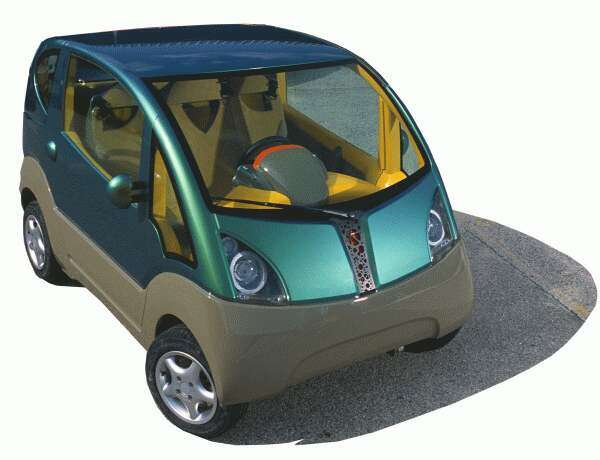
MIT's Technology Review has more on MDI's Air Car.

The Air Car was supposed to hit the streets years ago, but its release always seems just around the corner. MDI announced in 2002 that the cars would be used to replace taxis in Mexico City, but nothing resulted.

Tata's involvement this time around, combined with the fact that oil recently hit $100 a barrel, could change the game. India's largest automaker announced last February that it had struck a deal with MDI to further develop and refine Negre's compressed-air engine technology, with the intention of producing and selling the emission-free cars in India. It has since been reported that Tata invested nearly $30 million in MDI as part of the agreement.

The Review say experts have doubts about the energy efficiency of the compressed air motor.
"The main problem is that air gets hot when you compress it, so much of the energy input goes into raising the temperature of the air as you try to raise the pressure," explains Doug Nelson, a professor of mechanical engineering and an expert on advanced vehicle systems at Virginia Polytechnic Institute.
But, apparently the engine is much more efficient at using energy:
To propel the vehicle, compressed air from the tanks is injected into a small chamber, where it expands and cools. This expansion drives a downstroke of the piston. But as the ambient temperature begins to reheat the air in the first chamber, that air is forced into a second neighboring chamber, where it expands again to drive an upstroke. Using ambient heat helps capture more of the energy in the compressed air, ultimately improving the efficiency and expanding the range of MDI's Air Car. And compared with four-stroke combustion engines, in which half of the strokes are wasted to pull air and fuel into the chamber, the air engine makes use of every stroke.

...Even though one of MDI's compressed-air tanks would carry the energy equivalent of just one gallon of gasoline, the use of that air in the engine is 90 percent efficient.
The first production model will feature a hybrid engine and will sell at more than double the price of the Tata Nano:
The first CAT car to be produced is called the OneCAT, a "utilitarian" car for urban and rural driving that's specifically designed for use in overcongested cities and priced in a range ($5,100 to $7,800) within reach of consumers in a developing economy, such as India.

The ultralight bodies of the vehicles would be made of glued-together fiberglass and injected foam, and the aluminum chassis would also be glued, not welded, to simplify manufacturin


Let's see where this goes...

1.15.2008

air is better


And I don't mean Steve's newest baby.

I'm referring to Guy Nègre's Air Powered Car that apparently just signed a deal with Tata Industries (yes, they of Tata Nano fame) to "explore further development and refinement of the technology, and its application and licensing for India."

Not sure of the corporate-speak but I hope this leads to a production line.

I've covered this before but the specs bear repeating:

"The principle that makes this car work is very simple. Instead of using gas to create an explosion and make the pistons move, the vehicle’s engine is powered via three compressed air tanks located under its chassis. Environmentally speaking, this means all that goes out the exhaust pipe is cold, pure air, which can even be used as an air-conditioning source on a hot summer day.

As far as performance goes, the vehicle is pretty amazing. With a top speed of 110 kilometers per hour, it has autonomy of around 300 kilometers. All that is needed to fill it up is a compressed air station, and in case of emergency, an electrical source can be used to power the built-in air compressor, which can fill in the air reserve in about three hours. The core of the technology is controlled wirelessly via computer and the car’s electrical system is composed of a single wire."

(via groovygreen and geeksaresexy)
Compressed air beats 50 mpg anyday.

1.11.2008

true cost of car ownership


Robin Chase, founder of Zipcar,* had this to say about the Tata Nano.

(I think it's a great argument for moving away from our auto-dominated urban transport paradigm.)

We can think of the cost of a car has having three components (and yes, for those life cycle sticklers, I'm simplifying by ignoring the horrors associated with manufacturing and disposal for this post):

THE CAR: purchase, depreciation, maintenance. In the US, that is about $8k a year. While I imagine maintenance to be significantly cheaper in India than here, I am sure it will be the same unanticipated and underappreciated cost it is here. Americans currently spend 18 percent of their household budgets on their cars, how sad it is to contemplate the effects of that percent of income being taken out of the wages of low-income Indians. And because of the size of these unplanned for maintenance needs, I can also easily imagine that many of these cars will end up very poorly maintained, much like the ubiquitous auto rickshaws that flood Asian cities and are some of the dirtiest vehicles around.

CAR STORAGE: People typically park their cars for “free,” even in dense urban areas where the value of street and sidewalk space is high. This free is dramatically undervalued to the other users of this public space. Just as we saw beautiful squares in European villages being turned into parking lots, and acres and acres of land in American suburbia being paved to accommodate the one peak day a year at the mall, so too we can anticipate that every single possible space in Indian cities, in Indian poor neighborhoods, in Indian village squares, on what few sidewalks there were, will soon be filled with beautiful shiny Nanos. I can see the crowded sidewalk clearing for the Nano that pulls in and parks. The driver walks away and the crowd of pedestrians is left with less space. Gone will be places to play, places for markets, places to walk in narrow old neighborhood streets.

CAR DRIVING: Most people think that the cost of driving is just the cost of gas. In the US, this amounts to about 7% of the total costs that we account for and actually do pay. In India, one can imagine that fuel costs will feel like a heavier burden to those driving the Nanos. But the costs of gas are just a very tiny part of the whole. As we have seen from the wave of cities exploring congestion pricing (unfortunately no Indian cities). Congested roads, jammed past capacity already, will become gridlocked. The scooter that has a family of four on it, will be replaced by the safer-for-the-family Nano that occupies four times the amount of space.
Someone want to work out comparable cost for Philippine households?

Robin continues:
What is to be done? Is it fair to deprive lower-income people the opportunity to travel more conveniently and more safely? No. But we need to make every driver pay the real costs of using a car. Those real costs include market prices for storage; road taxes high enough to adequately maintain them once they’ve been built; congestion pricing as appropriate, and carbon taxes on emissions. More details can be found in my other posting on this subject.

Once driving personal cars becomes appropriately priced, we choose to use them == rather than other modes of travel -- when they are the best value for our need.
"The real cost of driving a car" -which is pretty much what I said when other bloggers argued for a fare increase for the MRT.

If we truly account for all the externalities, improving our public transportation becomes all the more urgent and makes so much more economic sense.

(And yes, that very delayed post about how to build a BRT coalition is coming soon...)

*Full disclosure, I am a very happy Zipcar member.

1.10.2008

tata nano


Tata Motors has unveiled the world's cheapest motor car at India's biggest car show in the capital, Delhi.

The vehicle, called the Tata Nano, will sell for 100,000 rupees or $2,500 (£1,277) and enable those in developing countries to move to four wheels.
Too bad Sarao didn't think of this. Of course, this probably isn't a good thing for cities.

< couldn't resist... >

Tata Nano.

Alternate names:
  1. Tata Kbonalangako
  2. Tata Ndakasabagal
  3. Tata Ntananmoangtraffic
  4. Tata Lisodsababolgam
  5. Tata Nginaangsikip (Pardon my french)
Your suggestions?

1.09.2008

it takes a pink line

Warning: Partly a rant.

This is a gem:

The MMDA will be painting pink lines on EDSA to keep cars from parking on the sidewalks. ("There are sidewalks on EDSA??? Where????")

"Under the scheme, three-inch wide pink lines shall separate the sidewalks from the roadways in an attempt to strictly enforce illegal parking laws."

Er, we need the pink lines to enforce parking laws? Don't we need enforcement to enforce parking laws?

Did they use pavlovian methods to train the MMDA traffic boys so they now only respond to pink?

And you've got to admire the MMDA's keen powers of observation:
"The project was conceived after MMDA officials observed that car owners who do not have their own garage often park their vehicles on sidewalks, blocking the way of pedestrians."

Wow. I had no idea.


< / sarcasm >
<>

  • One, widen the sidewalks. It should be at least 12 feet wide through the whole stretch of EDSA.

  • Two, limit the curb cuts - e.g., driveways and breaks in the curb, to no more than one every 200 feet. And driveways should be no wider than 10 to 12 feet. (Secondary roads should feature curb extensions and other traffic calming measures.)

  • Three, allow parallel parking on segments of EDSA and other major boulevards during off hours (say from 9pm to 6am). This gives vehicle owners a place to park at night -and if you used parking meters (or parking attendants), could be a good revenue source for local governments.

Of course these three suggestions are predicated on a commitment to make a city that is livable and pedestrian friendly.

And if we're going that way, why not redesign the streets completely? You can paint the tree grates pink if you really must have your signature color.


1.08.2008

look ma, no lights

...and no traffic buildup either.

Via boingboing:


Of course it's been sped up. (Notice the pedestrians).

But did you also notice, despite the seeming chaos, that there is no traffic buildup?

Which makes me wonder if Europe's experiment with taking away traffic signs can work even in megacities.

12.30.2007

seven


Expanding Mass Transit in Metro Manila

NEDA's given the greenlight to MRT-7. The pricetag? $3.3B, but that doesn't all go to rail:
The scheme calls for a 20-kilometer light rail system integrated with a 20-kilometer highway that will link the North Triangle area in Quezon City with San Jose del Monte City in Bulacan province.

“So all in all, this will be a 40-kilometer project and will come at no cost to the government (since it would be funded through the BOT scheme),” Santos explained.

The rail and road network is expected to cost as much as $1.3 billion, while the commercial and residential developments that are expected to rise along the route would cost another $2 billion.
Wait a minute. The "commercial and residential developments that are expected to rise along the route" will cost $2B and is part of the BOT?

Like MRT-8, this seems to be more of a real estate deal than a public infra project.

I'd like to see how all that "development" is going to be distributed. I'm betting most of it will be along the 20 kilometer highway, NOT along the 20-kilometer rail route. So much for leveraging the transit investment. More like the investors are leveraging government funds for their investments.

I have not seen any detailed plans, although they've given the general locations of the 14 stations, we do need to pay close attention to how these stations are designed and sited. For example: will the locations make it easy for commuters to transfer to connecting jeepneys? (To get to UP from the University Station? or to Ateneo from the Tandang Sora station?)

What will also be important is how the local government and the LTO respond to the plans for the stations. Quezon City should re-zone around the stations to get more density and more riders. The LTO and LTFRB should reconsider jeepney routes to feed the stations.

I would have much rather a Bus Rapid Transit project in place of light rail. The $1.2 billion (for the railway) would have brought at least 60 kilometers of BRT. Plus, a BRT system would have allowed the existing transport franchise holders (jeeps and buses) to possibly participate in the venture.

blinders or blindspot


Buses and traffic discipline in Metro Manila

These were my comments on iReport's "Too many buses, too many agencies clog Edsa": (hat tip to Eugene for leading me to the article)
Margie Grey's PCIJ article on the travails of the public bus system in Metro Manila was (characteristically) well researched and gives a quick overview of the confusing governance of traffic numbers involved in the PUB system. Thank you, Margie, for pointing out that private vehicles outnumber PUBs 9 to 1. A viable traffic solution must involve reducing private car use -and that can only be accomplished by providing more efficient public transport.

Margie's article does fail to account for the role of the economic model of PUBs in the behavior of bus drivers. I believe this less an oversight of the reporter than it is a serious blindspot among our policy makers.

We seem to have taken the "boorish behavior" of buses on EDSA as a given, taken it as function of (at best) a lack of driver education, or (more often_ as a lack of discipline among bus drivers. But bus drivers behave the way they do, drive the way they do because of the economic drivers (no pun intended) behind their occupation.

The "boundary" or commission system ("12 percent commission if daily earnings are P10,000 or less and 14 percent if earnings are more than P10,000") dictates the driving behavior as surely as confusing layers of governance on EDSA.

As I wrote before:

The Boundary System is basically a vehicle rent system. The driver is "hired" by the transport operator, to run and maintain his jeep, bus, or FX cab. The driver can run as many trips within the boundary period (standard is 12 hours) as he wants but he basically has to pay the "boundary fee" (usually, daily) to the owner -and his source of income is whatever he makes over and above the boundary fee. The driver covers the cost of gasoline and minor repairs.

The boundary system brings a logic to earning money that shapes the driving habits of the renting drivers. If the driver only earns above the boundary, then logic dictates that he must get as many passengers as he can in as many trips as possible . The driver also benefits by having the vehicle on the road as many days as possible - as repairs and shutdowns mean no income for the day.

So, a driver will:
  1. soak up passengers by basically waiting as long as he can in a high traffic/passenger volume area and then
  2. speed up to the next high volume pickup point to soak in more passengers.
  3. he will also see other public utility vehicles plying the route as competition so waiting in a line does not make much sense,
  4. he will try to get ahead of the line (usually by doubling up on the pickup lane) so he can be closer to the "source" of passengers and so
  5. he won't be tied down on the line and can speed up to the next destination.
  6. It also means that shorter trips are preferred to longer trips and
  7. vehicle downtime and thus vehicle maintenance is kept to a minimum (=inefficient engines, =more pollution).
This system is behind the traffic chokepoints at the major junctions and intersections of our cities. (I've written extensively about how our disorganized public transport system has shaped the built fabric and the quality of life in our metropolis.)

We've thrown good money after bad in countless traffic control and traffic discipline systems to try to get the "boorish behavior" under control. The OBR is just the latest incarnation (remember Oscar Orbos' sticker system?).

I find it amusing that Director Lantion thinks that getting buses to compete on "brand" will be the best approach to getting better traffic behavior from our PUBs.

Changing the economic model - to a salary based system, where the driver's income is NOT based on how many passengers he can pick up, will change driver behavior overnigh and will restore sanity to flow of PUBs on EDSA even without the expensive RFID systems.


Benjamin de la Pena
a.k.a -Urbano dela Cruz


Image credit: EDSA Traffic
by Mon Solo

12.13.2007

measures of success


These were my comments on Dave Llorito's latest post on the "success" of the MRT and how changing the pricing could decongest it and reduce the required subsidies:

Here's the news: very, very few mass transit systems in the world are profitable. I think only HK's metro and Tokyo's system make money. Even NYC's MTA is short on cash. Most systems are heavily subsidized.

Why? Because the governments account for the externalities of faster transport for workers, which, in theory, equals more productivity.
If the problem is bad service due to congestion -could it first be solved by more trains and more frequent trips? Of course, that does raise the operating costs.

That said, i'd trade you an increase in fares to cover actual operating costs of the mrt
IF you're willing to raise road and gasoline taxes to cover total environmental costs of driving (not just the road maintenance costs).

Better management, yes. recovering the true costs, sure -as long as you account for the public goods generated and as long as you even up the playing field by asking road users to pay the true costs of driving, too.

Oh, and I'm for variable pricing. maybe a two-tiered system (or a third for weekends).


One other way we can look at leveraging our light rail investments and paying for the operating costs is to use value capture strategies:
Increase the property tax for properties within a certain perimeter around the train stations (say 2/3 of a kilometer). -they benefit from the pedestrian traffic and location so why not capture that value?

Increase the real estate taxes around the stations -and while you're there, increase the densities and height limits (floor area ratios) of the zone, too.
You'll get more housing and more office space next to the train stations -making the train even more convenient.

And, oh, pair that up with a program to subsidize not just the rail, but part of the housing units generated by the increased density around the transit station. to encourage more people to live within walking distance of the transport investment.


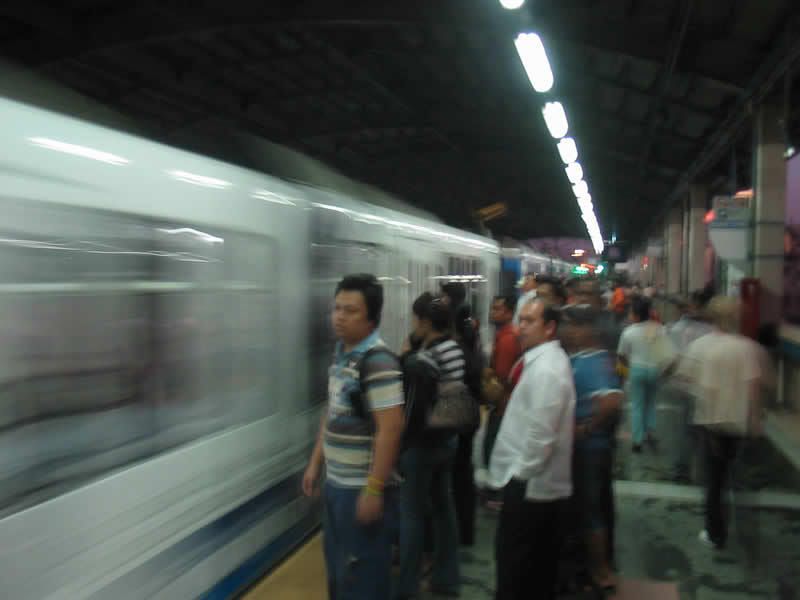
Image credit: by vertex
from the Skyscraper Forum

12.03.2007

cars vs. brt


(V.O.: ...and now we return you to our regular programming.)

I've illustrated this before, but if you need more convincing, try this very short video by Carlos Pardo of the Sustainable Urban Transport Project. (Via Richard Layman's Rebuilding Place in Urban Space.)

Seen it? Like it? Share it by emailing this link.

Ready to come up with the standard excuses of why this can't work in Metro Manila? Go ahead, throw them at me.

Btw, notice how you can fit a BRT on to an 8 lane road?

11.26.2007

the case for the pedicab

So, this is my first post on The City Fix. Recognize parts of it? -UDC


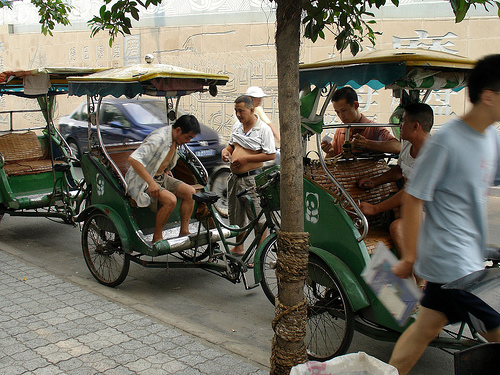
Pedicabs like this one above are found throughout the world.
Photo by drs2biz from Flickr.


To celebrate World Town Planning Day, the Ontario Planners Institute called on planners, towns and cities to “start planning ahead for a future where the car is a thing of the past.” Although it’s difficult to imagine a post-car city, we only have to look back to recent history to realize that cities are fluid, transforming over time, often based on the dominant form of transport. Because most of our cities emerged during the age of the automobile, it should come as no surprise that most of our cities have been shaped for and by the car. But this wont always be the case. The rising cost of oil and the environmental and human cost of congestion and air pollution is turning the logic of car-dominated cities on its head. As we explore options for a post-car future, it’s instructive to turn to the developing world, where cars still haven’t flooded the streets, and examine one of the most ubiquitous and green-friendly forms of transportation: the pedicab.

In our automobile driven cities, the pedicab occupies the bottom rung of the transportation ladder, frowned upon by both rich and poor alike. Where buses are seen as undisciplined nuisances with which cars must begrudgingly share the road, the pedicab is viewed as a backwards mutant not even deserving of the asphalt. Even pollution spewing autorickshaws and tuktuks are preferred to the pedicab. Some even refer to pedicabs as “road roaches” because they scamper and scatter in and out of traffic like cockroaches in the light. But as far as green cred goes, all other modes of transport pale in comparison to these human powered vehicles. Pedicabs generate no emissions and produce no waste, unlike cars and buses, with their heavy metals from used batteries that leech into the soil.

As far as low barriers to entry, the pedicab business is one the Bottom of the Pyramid folks at Nextbillion would love. You could literally buy hundreds of pedicabs for the price of one bus. Plus all building materials can be sourced locally, so there’s no need to import spark plugs or oil filters or engines. What’s more, there’s no need to buy oil that supports oppressive petrocracies. And the technology is so simple that self-repair is the rule rather than the exception. Bike infrastructure can help power local economies, as it has in Portland, Oregon, where an entire industry revolving around bicycling has emerged.

Pedicabs are unsafe only when they mix with other vehicles, affording little protection to the driver and the riders. And perhaps that’s the design challenge that our cities and city planners could solve. It is clear that our streets were not designed for pedicabs which must vie for a slice of the road with fast moving buses, trucks and SUVs. But what if cities built a city-wide green network anchored on shared roads for bikes, pedicabs, and pedestrians? Cities could set apart secondary and tertiary roads and designate them as green ways. They could redesign the road right-of-way to be friendlier to pedestrians, bikes and pedicabs. We could create a modified version of the Woonerf street to build alternative transport infrastructure that’s friendly to pedicabs.

The most bike friendly cities in the world are leading the way, engineering their streets to encourage biking. But these western cities are building bike infrastructure only for single riders. Perhaps the global south can lead the way with public transport built on human-powered service. The pedicab is the perfect place to start!

(Cross posted from: The City Fix)

11.19.2007

what BRT looks like


If you've got ten minutes, here's a good intro on what BRT can do for a megacity like Mexico.

It comes across as a little bit of hard sell but it could just be lost in translation.

Can you imagine this in our megacity?

11.10.2007

step one


So we've talked about how more people in Metro Manila take public transportation than drive private cars; about how prioritizing public transit, focusing on moving people, is a vastly more efficient use of our roads than just working on moving vehicles; and about how our public transit woes are tied down to the boundary system that governs the business.

The common theme in the discussion about those posts was that we really need the political will to get past the vested interests of the transport unions, to transcend the myopia of the traffic managers and to get national or local governments to pay attention.

So how do we build up the political will?

As the maxim goes, "the squeaky wheel gets the grease."

For too long the discussion of transportation issues have been nothing more than the back and forth between vendors (operators and drivers) and regulators about the right fare level or about who has traffic authority over buses and jeepneys. No one seems to be looking out for the rights of the passengers.

Our investments in mass transit seem to be all about big business interests, or clearing traffic for car riding elite or speculative real estate deals. While the public winds up with high cost projects with badly located and badly designed stations and disconnected rail networks. Who speaks for the customers and the taxpayers?

Who speaks for the people who have no option but to take public transit?

I think it's time we take the advice of WorldChanging. I think it's time that the patient 78% of Metro Manila citizens who take public transit demand what's due them.

I think it's time for a Metro Manila Transit Riders Union.

It's time to ask:

  • Should public transit riders have to spend more time traveling and in traffic? (Be it because of a traffic bias for cars and bad PUV driving behavior.)

  • The government keeps spending on expanding roads, why don't they spend on public transit facilities? Like better bus stops and jeepneys stops. Or better connections between modes. Or better sidewalks.

  • Why doesn't the government implement strict quality standards so that public transit riders don't have to suffer in dirty buses with barely functional airconditioning or super squeezed in seats?

  • Why shouldn't public transit be more efficient than private transportation?

My contention has always been that we need an Urban Coalition of civic and business leaders that will initiate a metro-wide discussion on urban planning issues. It may take a while to get that coalition off the ground. Starting a Metro Manila Public Transit Riders Union would be a good way to build up momentum among stakeholders, could be a good pre-cursor to the Urban Coalition and should not take as much energy to get off the ground.

We could start with colloquia in our schools, or meetings in our parishes, or informal lunch discussions about our own public transit woes in our workplaces. We could begin with a forum on transportation and invite speakers in our civic clubs. We could start a website with a sign-up sheet. We could begin by talking to our co-passengerss in our daily FX ride.

I know our civic leaders seem to be focused on bigger fish but I wish someone could find the energy to take this initiative as this addresses a very real issue that confronts the poor* in our cities. This could very well be step one in the path towards urban happiness in our metropolis.

Any takers?


Image credit: Indie Fist
by Sparktography


* -You would have to be very myopic not to see that inefficient public transport is an integral dimension of the effects of poverty on our families. The father or the mother who cannot afford a car must pay for that everyday in an extra hour or more spent in traffic, time spent away from their homes and their children.

Quick Links

Notable posts on the metro