7.07.2008

a little bit better


Jan Gehl, one of the most effective urban planners and urban theorists alive, has this advice about dealing with the seemingly overwhelming challenge of changing our cities:

Take it one step at a time.

Check the video above (a segment from Contested Streets) about the success of Copenhagen. Says Gehl:

It's really wonderful to live in a city where everyday, when you wake up in the morning, you realize that today the city is a little bit better than yesterday.

....

What they've done in this city is they taken little steps every year for forty years and (now) there is a fantastic difference between what it was then and what it is now.

One day at a time. Little steps over decades.

It would be impossible to "solve" Metro Manila overnight. But we can do it over time.


7.06.2008

lupang hinirang*


This, before we talk about how to change a city:


Caring About Places: Thresholds

Good places need to be excellent in many dimensions

They need to be structured so we can remember them,
They need to remind us of important things about our lives,
The need to suggest our positions in a sequence of time; not obsessively
marking the moment, but tracing the strands of decision over time

Good places need to be stimulating, to be forgiving, to be approachable,
to be more than we first think they are.
Good places need to sustain attention,
to invite and reward the interest we show in them,
to capture the curiousity and affections of many,
to draw their energy from diverse sources,
to garner and accept continuing investment.

Good places embody imagination,
Good places result from successive generations of care,
Good places engage the landscape, are inscribed with detail,
Good places take advantage of the capabilities of their time; appropriately and with discretion.
Good places confirm as well as challenge; challenge as well as confirm.

Good places set in motion patterns of social encounter that are constructive;
they are not hermetic
they are not threatening
they allow choices of path and association.

Good places let us see how we could be a part of them;
they have parts that are measurable in human terms --
niches of intimacy, rooms of purpose, spaces of assembly, fields of connection
they register human movement, mask and reveal activity, provide options,
evoke conversation, offer repose.

Good places must be considered at various scales;
they play an evident and welcome part in a larger community, landscape and region
they have elements that help us to place them in memory
they bear traces of the acts of building, gardening, tending, gathering
they are furnished and give comfort
they are a semblance of thought...the most precious of resources

Good places enrich our lives; they are thresholds between what has been
and
what might be.


The last line bears repeating:


Good places enrich our lives;
they are thresholds between what has been
and
what might be.


*lupang hinirang -tag., literally "land beloved"
Image credit: esquinita by Ouij

7.05.2008

hope for the city


I've been on an unintended hiatus from blogging for almost two months. I've moved to a new company and job and a new city and the settling-in has taken time.

Despite my absence from these pages, Manila hasn't been far from my thoughts. Mostly I've been thinking about the comments on this post from Carlos Celdran. Carlos posted a 1938 Andre de la Varre feature on Manila. The video is a must-watch for anyone interested in our city's history.

The camera pans across scenes of Intramuros and Binondo, of Ermita and Quiapo, and captures life in our city at a time of great change -when cars where beginning to take over the streets. Tranvias, calesas, automobiles, horse drawn buses and carabao drawn carts jostle with pedestians for the road. It shows congestion beginning in the streets, bustling commerce, churchgoers and promenaders.

Carlos' title for the post? "Sigh, sigh, sigh" as the film makes it easy to get nostalgic about the Manila we have lost. The comments echo his melancholia.

Kat says:

We've lost so, so much. :-( One hopes that we can rebuild, but it's been 70 years since that video, and over 60 years since the war, yet the deterioration continues. Sigh, again.
Alvin agrees:
"Sigh" indeed. Sad as I am that we may never be able to recapture how Manila looked like then, I'm thankful that these videos that you kindly shared with us give us a clearer portrait of a more genteel, comparatively classier Manila.
Most of the comments expressed a courageous love for the city -but all in the chord of "Our city is terrible now, and it's probably too far gone, but we love it anyway." -Which I admire but it bothers me nonetheless.

The love, heroic and seemingly unrequited, is principal. We must love the ground that raised us if our identity is to be grounded and if we are to grow deep roots.

The pessimistic melancholia, rose-colored glasses about a "genteel" past that may never really have been, and a clouded but determined commitment to hold the city dear despite its corruption, is ultimately self-defeating.

Do we still have hope for our city? Do you think we can still do anything about Manila and our megacity?

My fear is that, even those who profess to love the city, will say no. It is, after all, easy to be pessimistic, there is little that brings hope -and our city's problems seem too complex to find solutions.

But cities are never static. Cities are in constant flux. Buildings go up, and come down. Streets change shape and are rerouted. Properties are abandoned then reclaimed. Mores and fashions change with the generations

Cities change. Understanding how cities change will help us to shape that change. To set a path to sustainability and livability and mitigate the decay.

If you love the city of your birth and life but feel little hope for its future, then I offer the next few posts to you. Cities can change and cities can turn around. There are lessons we can learn from others and I hope to write about them, to teach and more importantly, to inspire.


5.16.2008

the net and the metro

Being a mapping and graph geek, I've been thinking about the juxtaposition of cities and their websites. Is there any sort of relationship? Does the complexity of a city's website relate to the complexity or legibility of its built environment? Or do they speak more to the level of participation the city engenders through its online presence?

Here are the webgraphs of four cities, two of ours and two world capitals, you tell me what you think:


London


New York City


Quezon City


Makati City


(I think webgraphs definitely correlate with the online success of presidential campaigns.)


Whether or not the web and the physical city correlate, I am sure the web will have an impact on our cities. Here's what the inventor of the world wide web had to say about it:

"What's exciting is that people are building new social systems, new systems of review, new systems of governance.

"My hope is that those will produce... new ways of working together effectively and fairly which we can use globally to manage ourselves as a planet."


Sir Tim's comments inspire me and make me think of the possibilities that a networked Metro Manila population can do for the city.

What effect do you think the web will have, or is already having on metro manila?

5.02.2008

streets as valuable public spaces


"treat streets as valuable public places,
rather than utilitarian corridors"

So says Janette Sadik-Khan, Commissioner of New York City's Department of Transportation, as she introduced Gotham's new "Sustainable Streets" strategic plan. The plan "lays out a vision for New York City of improved mobility, safer streets and reduced impact on global climate, all resulting in a world class quality of life."

Although the plan has it's failings and critics, it does clearly exhibit how city governments, and their transportation departments in particular, have turned 360-degrees in their paradigms. from roads to streets, and understanding the impact that improving the streetscape -making sure it caters to people first, rather than just vehicles - has on the quality of life in our cities.

It only makes sense, given that road infrastructure takes up at least 30% of a city's total land area. Turning roads into complete streets will do wonders not only for mobility, but also for livability. (c.f. -how children who live in areas with tree-lined streets are less likely to get asthma.)

It's a rethink that we also dearly need for Metro Manila and all Philippine cities.


5.01.2008

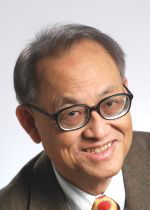
leon chua and the memristor


So, if you're geeky enough, you would have heard the HP has finally created the missing link in the "family of circuits" -the memristor.

"an entirely new kind of electronic device, which could make chips smaller and far more efficient...a computer built with memristors could allow PCs that start up instantly, laptops that retain sessions after the battery dies, or mobile phones that can last for weeks without needing a charge...

"Memristors were first proposed in 1971 by Professor Leon Chua, a scientist at the University of California, Berkeley.

They are the "fourth" basic building block of circuits, after capacitors, resistors and inductors."
And, as you can tell by the name: Prof. Leon Chua is pinoy -a product of Mapua (1959) -by way of MIT and UI-Urbana-Champaign.

Makes you proud to be pinoy!

Pass this around, please.

(Ok, this has nothing directly to do with cities - but I'm a geek, so live with it.)


4.27.2008

long time


It's been nearly a month since my last post. I wonder if anyone is still with me. My apologies to the lack of responses to your comments. Work has gotten far too hectic lately, and it doesn't look like there will be any let up soon. The upside is there are exciting developments on the horizon.

My unintended dormancy made me think of all some of my favorite blogs/bloggers that have gone silent:

  1. Willy Priles/A Nagueño in the Blogosphere -most recent post, January 28, 2008
  2. Dr. Gauden Galea/Only Connect (link is dead blog.slidebay.com)
  3. Uzi|My Everyday Manila - (domain is dead www.everdisturbed.com)
  4. Lorimer/Manila, My Manila - most recent post, November 26, 2007
  5. Edwin Lacierda/San Juan Gossip Mills Outlet - most recent post, November 13, 2007
Do you have any favorite blogs that have gone silent?

UDC


Photo credit: Pocket Watches by jekemp

4.01.2008

what will the sustainable city of the future look like?


What will the sustainable city of the future look like? from EMBARQ Network on Vimeo.


Nancy Kete's speech at the World Conference on the Development of Cities in Porto Alegre, Brazil on February 16th, 2008.

This is a must, must see video for any would be urbanist and for all environmentalists. Listen closely to her calls for visionary urban leaders and how our cities can save the world.

Military strategists are fond of saying "Amateurs talk of strategy. The Pros talk about logistics."

If we are to succeed, we have to look beyond our immediate problems and begin to envision how we will create sustainable cities that will compete in this century and the next.

3.14.2008

schadenfreude


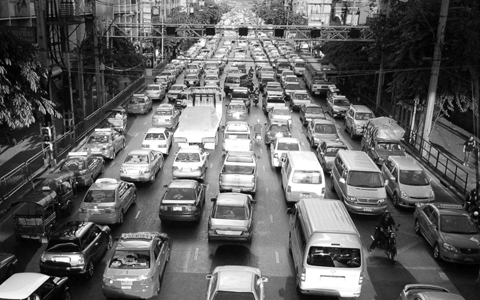
And you thought our traffic was bad. CityFix quotes Time Magazine, which recently named Bangkok The Capital of Gridlock.

CityFix says that the author explained just how bad traffic can get in the Thai capital:

“Police don’t consider traffic bad until a car is stationary for at least an hour. Really bad is two hours.”
And they proceed to cite how the article relates traffic to a myriad of problems, including:

The human side: “Traffic in Thailand’s capital snarls with such ferocity that hundreds of women over the past few years have been forced to give birth in cars.” Police are now trained in midwifery, [Hannah Beech] reports.

The economic side: “More than $1 billion in productivity is lost every year to traffic jams.”

The environmental side: In the 1970’s Bangkok cemented over canals to build more streets for the growing number of cars. “…the declining number of canals, which once served as reservoirs for rain, means that substantial portions of the city flood during the five-month-long wet season. The rising water invariably short-circuits traffic lights, turning intersections into free-for-alls.”
So be grateful that things are not that bad in our megacity. But realize we are headed that way if we continue to prioritize cars over people. We really need efficient public transportation.

And if you have some time on your hands and are prepared to get caught up with online tweaking, go learn about traffic patterns and how traffic jams form via this nifty java-based traffic simulator (via WorldChanging).

Try tweaking the speed limits vs. traffic flow, you'll see how slowing down the traffic actually allows the roads to absorb more vehicles and allows traffic to flow smoother.

(Except it doesn't let you control the number of lanes otherwise you can see how adding road capacity doesn't actually lead to smoother traffic.)


Photo by pchweat via TheCityFix

3.13.2008

getting better public transit in metro manila (part 4)

Mobilizing the political will
to improve public transit in Metro Manila
Part 3: Divide and Conquer

This is part four of a series on how to improve public transit in Metro Manila.

Reviewing again the previous posts:

Step One is to change the frame. Improving public transit is not about decongesting traffic. It is about social justice.

Step Two is to show an alternative vision. Discussing what is wrong about the status quo will not bring change by itself. We have to show what is possible.


Step Three is to build a winning political coalition. A political coalition that will shepherd the change through the political process, and bring political pressure to bear to convince the policy wonks and sway the elected officials.

"Winning" presumes a political contest - a battle, and so we cannot win unless we win over or defeat the opposition which brings us to:

Step Four, Dividing and Conquering the Opposition.

Sun Tzu exhorts us to "know your enemy," so the first question is, "Who would be opposed to more efficient public transportation in Metro Manila?"

The answer, of course, is no one.

More so if the premise is social justice. What politically-sane person in the Philippines would stand against something that is about efficiency, serves the public and is pro-poor?

But it would be the height of naivete to think that there would be no opposition. There will be, but their opposition will stand on issues NOT diametrically opposed to efficiency and social justice.

We need to know their interests, issues and goals and use the same to gain leverage for our agenda.

There will be two types of opposition: organized and not. And that nomenclature is split further down to groups who are influential or not.

The biggest, most visible threat would be from organized and influential opposition, which in my book will likely be the Operators and Drivers Associations of the present public transport services (BODAs, JODAs and TODAs). They have, after all, recently and successfully flexed their muscles (giving, what R.O./Y.R. calls Manila's Extreme Sport, a day long uptick in degree of difficulty -though Enrique claims he found no real effect). They also have a long history of protest action.

But as organized as the ODAs are, they are in no way monolithic. To succeed in breaking the opposition, we have to look at the internal faultlines and use their interest to win adherents over to our side.

Drivers, above all, want a predictable income. Under the boundary system, fluctuations in fuel prices, uneven fines, capricious law enforcement and traffic and traffic congestion affects their take home income. Any system that smooths out those fluctuations - that gives them steady income would be preferable.

Operators, meanwhile, want to maximize their profits. As businessmen, they will appreciate a system that provides incentives to their investments.

One other note, the current free-wheeling public transport ecosystem provides an entrepreneurial route from driver, to small operator, to large operator (or transport consortium). A better public transit system can win adherents if it answers those concerns.

The Bus Rapid Transit system, as implemented in many cities, offers viable solutions to each of these concerns.

First of, the dedicated-lane, bus priority traffic system automatically eliminates the congestion and capricious law enforcement concerns of the drivers.

Also, unlike capital intensive Light or Heavy Rail systems, BRT systems provide a pathway for participation for existing transport providers. Drivers and smaller operators can be encouraged to form cooperatives to bid for and to run the services of the BRT. Large consortiums can easily transition and also provides services. Take the example of Mexico's MetroBus, where 70% of the service is run by companies and cooperatives from the ranks of the former drivers and operators of the minibus services that the BRT system replaced.

Becoming service providers for the BRT, under a formalized enterprise, will allow drivers to shift into formal salaries , moving them away the insecurity of the boundary system. They will also have the benefits of formal employments, such as health insurance and social security.

We can also mandate employee ownership of the service firms so that the drivers earn more than their salaries, but also partake of the profits. Their livelihoods will also not be tied down to the fare rates, but their extra income (share of the profits) will be linked to the efficiency of the service.

A properly designed BRT policy and investment program will move small operators from single proprietorships into medium sized business enterprises. We can provide the capital and tax incentives -for example, by having the government buy and own the buses and leasing them back to the operators to reduce the operator's asset risks. The system can professionalize the current large consortiums, encouraging better corporate management.

A properly designed BRT policy will break the ranks of the ODAs and will likely appeal to majority of the drivers and will draw quite a few of the entrepreneurs.

Other opposition

The only possible opposition left will be the companies with vested interests in large infrastructure projects along with politicians who earn kickbacks from these major investments.

They will argue that fixed rail systems are more efficient but their influence can be neutralized by questioning their vested interests. So, too, with politicians who would stand on their side.

Imagine a politician who is not only labelled "anti-poor" for standing against the social justice issues of a more efficient public transport system, but that they could also be questioned for supporting large investments - as having vested interests.

The final other possible group would be an organized motorist group, which presently does not exist as a viable political force, but it is foreseeable that they could coalesce into a front that can wield some influence. Their main concern would be the traffic consequences of appropriating a lane for the BRT, but that easily be traded of with the removal of undisciplined PUV behavior and by arguing that more efficient public transit will actually reduce car use -thereby freeing up the road for more devoted motorists.

If we frame the BRT proposition correctly, and wield the right political levers, we can easily neutralize the opposition listed above.


Next up: Making it work, the mechanics


Image credit: Our Direction by B Tal

Quick Links

Notable posts on the metro