4.27.2008

long time


It's been nearly a month since my last post. I wonder if anyone is still with me. My apologies to the lack of responses to your comments. Work has gotten far too hectic lately, and it doesn't look like there will be any let up soon. The upside is there are exciting developments on the horizon.

My unintended dormancy made me think of all some of my favorite blogs/bloggers that have gone silent:

  1. Willy Priles/A Nagueño in the Blogosphere -most recent post, January 28, 2008
  2. Dr. Gauden Galea/Only Connect (link is dead blog.slidebay.com)
  3. Uzi|My Everyday Manila - (domain is dead www.everdisturbed.com)
  4. Lorimer/Manila, My Manila - most recent post, November 26, 2007
  5. Edwin Lacierda/San Juan Gossip Mills Outlet - most recent post, November 13, 2007
Do you have any favorite blogs that have gone silent?

UDC


Photo credit: Pocket Watches by jekemp

4.01.2008

what will the sustainable city of the future look like?


What will the sustainable city of the future look like? from EMBARQ Network on Vimeo.


Nancy Kete's speech at the World Conference on the Development of Cities in Porto Alegre, Brazil on February 16th, 2008.

This is a must, must see video for any would be urbanist and for all environmentalists. Listen closely to her calls for visionary urban leaders and how our cities can save the world.

Military strategists are fond of saying "Amateurs talk of strategy. The Pros talk about logistics."

If we are to succeed, we have to look beyond our immediate problems and begin to envision how we will create sustainable cities that will compete in this century and the next.

3.14.2008

schadenfreude


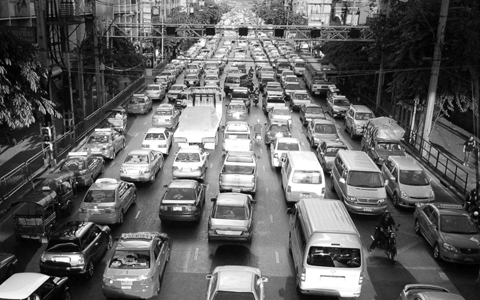
And you thought our traffic was bad. CityFix quotes Time Magazine, which recently named Bangkok The Capital of Gridlock.

CityFix says that the author explained just how bad traffic can get in the Thai capital:

“Police don’t consider traffic bad until a car is stationary for at least an hour. Really bad is two hours.”
And they proceed to cite how the article relates traffic to a myriad of problems, including:

The human side: “Traffic in Thailand’s capital snarls with such ferocity that hundreds of women over the past few years have been forced to give birth in cars.” Police are now trained in midwifery, [Hannah Beech] reports.

The economic side: “More than $1 billion in productivity is lost every year to traffic jams.”

The environmental side: In the 1970’s Bangkok cemented over canals to build more streets for the growing number of cars. “…the declining number of canals, which once served as reservoirs for rain, means that substantial portions of the city flood during the five-month-long wet season. The rising water invariably short-circuits traffic lights, turning intersections into free-for-alls.”
So be grateful that things are not that bad in our megacity. But realize we are headed that way if we continue to prioritize cars over people. We really need efficient public transportation.

And if you have some time on your hands and are prepared to get caught up with online tweaking, go learn about traffic patterns and how traffic jams form via this nifty java-based traffic simulator (via WorldChanging).

Try tweaking the speed limits vs. traffic flow, you'll see how slowing down the traffic actually allows the roads to absorb more vehicles and allows traffic to flow smoother.

(Except it doesn't let you control the number of lanes otherwise you can see how adding road capacity doesn't actually lead to smoother traffic.)


Photo by pchweat via TheCityFix

3.13.2008

getting better public transit in metro manila (part 4)

Mobilizing the political will
to improve public transit in Metro Manila
Part 3: Divide and Conquer

This is part four of a series on how to improve public transit in Metro Manila.

Reviewing again the previous posts:

Step One is to change the frame. Improving public transit is not about decongesting traffic. It is about social justice.

Step Two is to show an alternative vision. Discussing what is wrong about the status quo will not bring change by itself. We have to show what is possible.


Step Three is to build a winning political coalition. A political coalition that will shepherd the change through the political process, and bring political pressure to bear to convince the policy wonks and sway the elected officials.

"Winning" presumes a political contest - a battle, and so we cannot win unless we win over or defeat the opposition which brings us to:

Step Four, Dividing and Conquering the Opposition.

Sun Tzu exhorts us to "know your enemy," so the first question is, "Who would be opposed to more efficient public transportation in Metro Manila?"

The answer, of course, is no one.

More so if the premise is social justice. What politically-sane person in the Philippines would stand against something that is about efficiency, serves the public and is pro-poor?

But it would be the height of naivete to think that there would be no opposition. There will be, but their opposition will stand on issues NOT diametrically opposed to efficiency and social justice.

We need to know their interests, issues and goals and use the same to gain leverage for our agenda.

There will be two types of opposition: organized and not. And that nomenclature is split further down to groups who are influential or not.

The biggest, most visible threat would be from organized and influential opposition, which in my book will likely be the Operators and Drivers Associations of the present public transport services (BODAs, JODAs and TODAs). They have, after all, recently and successfully flexed their muscles (giving, what R.O./Y.R. calls Manila's Extreme Sport, a day long uptick in degree of difficulty -though Enrique claims he found no real effect). They also have a long history of protest action.

But as organized as the ODAs are, they are in no way monolithic. To succeed in breaking the opposition, we have to look at the internal faultlines and use their interest to win adherents over to our side.

Drivers, above all, want a predictable income. Under the boundary system, fluctuations in fuel prices, uneven fines, capricious law enforcement and traffic and traffic congestion affects their take home income. Any system that smooths out those fluctuations - that gives them steady income would be preferable.

Operators, meanwhile, want to maximize their profits. As businessmen, they will appreciate a system that provides incentives to their investments.

One other note, the current free-wheeling public transport ecosystem provides an entrepreneurial route from driver, to small operator, to large operator (or transport consortium). A better public transit system can win adherents if it answers those concerns.

The Bus Rapid Transit system, as implemented in many cities, offers viable solutions to each of these concerns.

First of, the dedicated-lane, bus priority traffic system automatically eliminates the congestion and capricious law enforcement concerns of the drivers.

Also, unlike capital intensive Light or Heavy Rail systems, BRT systems provide a pathway for participation for existing transport providers. Drivers and smaller operators can be encouraged to form cooperatives to bid for and to run the services of the BRT. Large consortiums can easily transition and also provides services. Take the example of Mexico's MetroBus, where 70% of the service is run by companies and cooperatives from the ranks of the former drivers and operators of the minibus services that the BRT system replaced.

Becoming service providers for the BRT, under a formalized enterprise, will allow drivers to shift into formal salaries , moving them away the insecurity of the boundary system. They will also have the benefits of formal employments, such as health insurance and social security.

We can also mandate employee ownership of the service firms so that the drivers earn more than their salaries, but also partake of the profits. Their livelihoods will also not be tied down to the fare rates, but their extra income (share of the profits) will be linked to the efficiency of the service.

A properly designed BRT policy and investment program will move small operators from single proprietorships into medium sized business enterprises. We can provide the capital and tax incentives -for example, by having the government buy and own the buses and leasing them back to the operators to reduce the operator's asset risks. The system can professionalize the current large consortiums, encouraging better corporate management.

A properly designed BRT policy will break the ranks of the ODAs and will likely appeal to majority of the drivers and will draw quite a few of the entrepreneurs.

Other opposition

The only possible opposition left will be the companies with vested interests in large infrastructure projects along with politicians who earn kickbacks from these major investments.

They will argue that fixed rail systems are more efficient but their influence can be neutralized by questioning their vested interests. So, too, with politicians who would stand on their side.

Imagine a politician who is not only labelled "anti-poor" for standing against the social justice issues of a more efficient public transport system, but that they could also be questioned for supporting large investments - as having vested interests.

The final other possible group would be an organized motorist group, which presently does not exist as a viable political force, but it is foreseeable that they could coalesce into a front that can wield some influence. Their main concern would be the traffic consequences of appropriating a lane for the BRT, but that easily be traded of with the removal of undisciplined PUV behavior and by arguing that more efficient public transit will actually reduce car use -thereby freeing up the road for more devoted motorists.

If we frame the BRT proposition correctly, and wield the right political levers, we can easily neutralize the opposition listed above.


Next up: Making it work, the mechanics
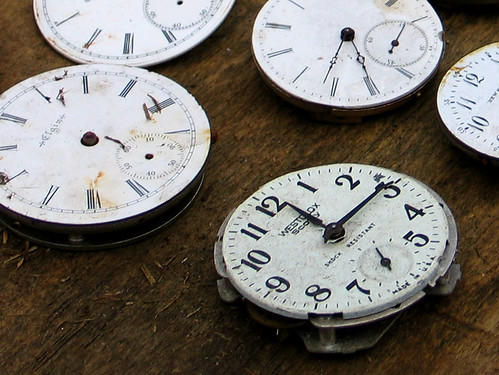


Image credit: Our Direction by B Tal

2.29.2008

design of our democracy


I've finally managed to turn this series into a pdf suitable for download (1.1mb).

I've adapted it a bit, rewrote some sections that worked in the medium of a blog but didn't quite translate to paper.

It's a bit of a slog but I hope you find the time to read through it. I hope it prompts some thinking.

I also think its an opportune time to discuss why we seem to be stuck in a cycle of corrupt leaders.


p.s. A friend complained about the colors bleeding her inkjet dry, so here's a black and white version (400kb).

2.26.2008

if you want to know more about brt

All About Bus Rapid Transit


This one's for the great folks over at the Philippine Forums of Skyscraper City who are discussing how we put up bus rapid transit in our cities:

The Tri-State Transportation Campaign has a great online resource on Bus Rapid Transit -what it looks like, how it works (in urban and suburban settings). It's a very concise introduction to BRT systems and links to tons of resources.

If it's any comfort, the TSTC is also trying to get BRT implemented and expanded in the New York-New Jersey metropolitan area and are working to build up the political will to improve public transit in their megacity.


With a hat tip to Streetsblog.

2.25.2008

getting better public transit in metro manila (part 3)


Mobilizing the political will
to improve public transit in Metro Manila
Part 3: Building a winning coalition

This is part three of a series on how to improve public transit in Metro Manila.

To review where we have been:

Step One is to change the frame. Improving public transit is not about decongesting traffic. It is about social justice.

Step Two is to show an alternative vision. Discussing what is wrong about the status quo will not bring change by itself. We have to show what is possible.
This brings us to:

Step Three: We need to build a winning political coalition
.


Politics often carries a negative connotation but at its root, politics is about the art and science of influencing and shaping public policy and changing policy is about shepherding the proposed changes through the political and policy formation process. It requires the shaping of public opinion, mobilizing that opinion into a political force and then bringing the appropriate political forces to bear at the right points in the process.

Effecting policy changes are often long slogs with victory going to those who can cobble, stable and effective coalitions. Miracle moments (something I'm afraid we have become addicted to) are rare and when they do occur, it usually just results in changes in leadership rather than substantive changes in policy. The change will rarely be lead by policy wonks or elected officials -rather, organized groups must bring political pressure to bear to get the policy wonks to rethink policy and the elected officials to support the change.

Mobilizing the political will to improve public transit in Metro Manila means building and mobilizing a winning coalition.

Who should be in the coalition?

The following groups should be natural core members of this coalition:

1) URBAN POOR: Ideally there should be a commuters union organized and powered by users of public transport. Since there is none, then the urban poor groups should take their place. The urban poor is the sector most dependent on public transit to function in the city and because improving public transit is a social justice issue, then this should be on top of the agenda of advocates for the poor.

2) THE CHURCH/FAITH-BASED GROUPS: Because it is a social justice issue, then the religious groups should also be in the coalition and should be working actively to address that inequity

3) LABOR UNIONS: Workers should also have a dog in the race if inefficient public transit is a bane to families of laborers.

The following groups should be strongly supportive:

4) EMPLOYERS CONFEDERATION and CHAMBERS OF COMMERCE: as inefficient public transit directly effects worker productivity. It also affects the marketability of the city as an investment destination. - More efficient public transit increases productivity and reduces the stress on workers. (These groups can also line up behind the social justice banner.)

I can think of many more groups that can have a natural affinity to this coalition, but i'll stay with this list for now. I'll take any suggestions you might have.

The operational word, of course, is "winning" and it will not be enough to cobble this coalition. The coalition must also effectively neutralize the opposition. And that will be the topic of my next post:

Part 3: Dividing and conquering the opposition


Image credit: Drivers wanted by davefitch

2.24.2008

supercarlosfragilistic


Supercarlos, defender of Urbanity


Sorry Carlos, but I couldn't resist.* It's such a begging-to-be-photoshopped moment.

I'm sure other readers have better photoshop-foo. So, at the risk of receiving Carlos' ire, I invite you to make your own version of our local (manila loving, tour guide) superhero.


*Just say the word, and I'll take this down -UDC.

2.14.2008

green from brown

what the slums can teach us
about green design

We think squatter colonies are just about the least green places on earth. They are often dirty, rank places, that (at least in our imaginations) are rife with diseases. And yet, people who live in squatter colonies have the smallest ecological footprint of any population in our rapidly urbanizing earth.

In the sanitized environment modern technology has given us, we have learned to forget that we actually live in the closed-ecosystem of a single planet. We are separated from our consumption and our effects. We are deluded and we do not realize that what we do, what we consume, what we throw away affects the whole ecosystem and that we use up finite resources or bring toxic waste into the environment.

Though I do not wish to condemn anyone to live in or to continue to live in the squalor of slums, there are a few lessons we could learn from the squatters about the principles of green design:
  1. Keep your s**t - slum areas do not have sewer systems, or septic tanks. In many places, raw sewage flows down the middle of informal streets and gathers in pools so that everyone can benefit from the aroma and partake of the diseases.

    Why? Because most of us live with dotted lines to our ecological system. We flush the toilet and we don't know where our waste goes. (Most likely to septic tanks that leach into our aquifers or to gravity sewer systems that just lead to outfalls into our rivers, lakes or seas.) Our sanitation systems separate us from the damage we do to our environment.

    Green design will take away those dotted lines, give us direct feedback (so we know where our s**t goes) and give us a closed loop system.

  2. Share (meager) resources - slum areas often have communal toilet and bath facilities, and communal water sources where up to 800 families could be sharing a single community faucet or 4-6 public bathrooms and toilets. That means waiting in line to get your bucket of water or to use the loo. Which also means you have to be considerate (or else) of other people waiting in line.

    Why? The rest of us get our water from private taps - delivered straight to our bathrooms and kitchens. Apart from the monthly water bill, we have no real concept of how our use of resources affects others.

    Green design will give us feedback on how much we consume of our shared resources.


  3. Reuse materials - squatter shanties are made of found/reused/recycled materials. Usually the dregs of what the rest of us throw away. They are patchwork quilts of different materials -each maximized for what it can provide.

    Our "formal" buildings use up tremendous resources and tremendous energy. As much as a third of green house gas emission come from the energy we put into putting up buildings. We eat up trees to get wood, and carve up mountains to get stone and metal and sand. The paints we use, the cements, the glues, the plastics - are all toxic materials and we leave a lot of construction wastes -that wind up in landfills and in our rivers and groundwater.

    We do even worse when we tear down existing buildings - throwing away the energy and resources (and often, our heritage) -so we can build new buildings that consume even more of our planet.

    Green design will have us reuse materials or use renewables and use "cradle to cradle" product Life-Cycle design to plan for re-use. It will have us consider embodied energy and embodied toxicity in the materials we us.


  4. Minimize your use of space -the density some of our informal settlements in Metro Manila can be as high as 41,000 people per square kilometer. That means each person uses up about 5 x 5 meters of total space -including their share of public space. In practical terms, that can translate to 1.5 square meters of living space per person and extended families of 5-7 relatives share a home of under 20 square meters.

    The homes of our middle class and elite take up so much space. Often this space is wasted in single function rooms that are hardly used. Most of these homes are large enough so family members can go through a day without having to see each other. -The larger the home, the bigger the ecological footprint.

    Green design will use space creatively and design it for efficiency.

  5. Don't have too much stuff -because their living space, and their incomes are meager, squatters don't accumulate stuff and thereby consume less. TVs are shared with the whole neighborhood. Clothes are cared for -and passed on - for as long as they can last. So with other products and old furniture and appliances.

    In contrast, our relatively generous spaces and our incomes let us buy more worthless stuff and lets us accumulate them (unused) in our homes.

    Green design will make each item practical and valuable, and last long.

  6. Find value in waste -the worst squatter communities are usually cheek-by-jowl with our dumpsites and landfills. The people who live there survive on scavenging the trash for items that can still be sold or reused.

    In contrast, we consume. We use once and throw away - food, or packaging, or materials (and sometimes, even people).

    Green design will generate minimal waste and plan it so waste produce in one process can be used as inputs for another, moving from linear systems to looped systems.


So next time you pass by that smelly, dirty squatter community while driving your hybrid car -bow your head in humility. The squatters, in their dilapidated shanties, are way more green than you could ever hope to be (enclosed in your air-conditioned, shiny metal prius).


Image credit: Squatters by Mon Solo


P.S. - How's that Lozada business going? Ready to kick out Gloria, or are you still willing to wait?

2.13.2008

getting better public transit in metro manila (part 2)


Mobilizing the political will
to improve public transit in Metro Manila
Part 2: A promise of what is possible


So, first we have to change the frame of the conversation: from congestion to social justice.

The consequence of a bad public transport system is not bad traffic (alone) but a fundamental inequity -where those who cannot afford cars or cannot afford to take cars everyday pay a greater share of their household income and pay a greater penalty in time.

A bad public transport system is inequitable. And it is also inefficient.

We need to get better public transport not because we want to get rid of traffic congestion* -but because we want a transport system that does not favor the rich over the poor and the middle class. We want it because we want parents to spend more time with their children and we want students to have more time to study.


The next thing

The next thing we have to do is to provide an alternative vision of what can be.

You cannot change anything by simply complaining about it or pointing out what is wrong. We do not need any more black hats to tell us why something does not work when we know it is not working. We need to see what will work.

You can only inspire and motivate people to change if you show them what can be.

This is where the success of Bogota, Curitiba, Mexico and Jakarta comes in. We don't have to reinvent the wheel. There are many, many successful examples of bus rapid transit projects.

These projects are successful not only in terms of efficiency, but also in terms of economy and democratic participation.

Unlike massive light rail projects, bus rapid transit is:
  • cheaper (at just 1/5 to 1/3 the cost per kilometer vs. fixed rail)
  • cheaper to operate (no substations, no high maintenance infrastructure)
  • is more flexible (if you design the stations right, you can have service overlaps)
  • faster to roll out (transjakarta started in 2004 and will have a total length of 159 kilometers by the end of the decade)
  • is more participative (you can ask existing bus operators and drivers to bid to operate the buses -compare that to their options when we go with expensive fixed rail infra)
We need to invite people from these cities to come and talk about their success. We need to show videos of how BRT works and do TV and magazine reports on our transportation options. We need to show the best practices and the best solutions other mega cities are already exploring,

We need to talk about BRT and other alternative transportation systems (like bicycle networks, and bike rental systems). We need to get everyone to ask:

Why not?
and
So why can we do that here?


Up next, Part 3: Building a winning coalition


*BTW, next time someone says we need to ---take your choice:
  • widen roads,
  • build flyovers,
  • discipline the driver
  • deploy more traffic cops
  • buy a new computerized traffic signal system or
  • build new roads
--to eliminate traffic congestion, challenge them to name ANY CITY in the world that has eliminated traffic congestion by doing any of those actions. I guarantee you, NOT ONE city or region or metropolis in the world has has succeeded using any of those options.

NOT ONE.


There is only ONE PROVEN method to reduce traffic congestion -and that's congestion pricing.

It's been proven in Singapore. It has been very succesful in London. New York is planning to implement it.

Quick Links

Notable posts on the metro