1.23.2008

dumbest.idea.ever


Teodoro, Marcelino
Representative
Marikina City, 1st District
Party: LAKAS-CMD
Term: 1


WARNING: This is a rant

Freshman congressman Rep. Marcelino Teodoro (Lakas-CMD, 1st District, Marikina) wins this year's award for the dumbest urban management idea EVER.

House Bill No. 2938 would allow free parking in shopping malls, hotels and other commercial establishments.

How stupid is that? Talk about auto-elitism. And this guy is one of the vice-chairs of the Metro Manila Development committee in congress.
"In the interest of upholding the rights of consumers, these centers of leisure and other related activities should provide free parking spaces and amenities to their patrons," Teodoro said.

Teodoro said owners of commercial establishments should not profit from their customers through the collection of parking fees since it has negligible effect on their revenues. "Anyway, any income derived from parking fees are mitigated by the influx of customers once the prohibitive costs of parking fees are eliminated," Teodoro said.
It's so stupid I won't even bother to explain why I think it's stupid. (Can someone please explain the idea of externalities to the good congressman?)

And runner ups in stupidity goes to Pacific News Center and their reporter Mike Cohen. Read the totally unenlightened and uneducated article which begins with this gem of a bullet under the photo:
Metro Manila's increasing transportation and parking problems led to alternatives like the MRT and LRT train systems
Really now? Parking problems led to alternatives like the MRT?

Cohen continues:
In some parts of Metro Manila, even public spaces on streets and sidewalks often attempt to restrict parking.
When did parking become a right?

Ah, kids, the road ahead is a long one. There are so many we need to educate and enlighten.

So many.


---

What floors me is Teodoro's legislative record doesn't seem to be that bad. He has
  • HB02230. AN ACT REGULATING THE USE AND MAINTENANCE OF SIDEWALKS, STREETS AND SIMILAR PUBLIC PLACES AND FOR OTHER PURPOSES, and
  • HB00715. AN ACT REGULATING THE CONSTRUCTION, INSTALLATION AND MAINTENANCE OF BILLBOARDS AND FOR OTHER PURPOSES
of course he also has:
  • HB02196. AN ACT PROHIBITING CYBER SEX AND OTHER RELATED ACTIVITIES IN THE INTERNET, PROVIDING PENALTIES THEREFOR AND FOR OTHER PURPOSES
(I'd like to see them enforce that!)

1.22.2008

looking for collaborators


I'm getting tired of scouring the metro pages of the dailies, looking for significant news about our cities -and by significant, I mean anything to do with development, urban planning, real estate, investments, governance, infrastructure, management, and local politics.

The metro pages of our dailies are filled with crime stories and they fail to cover news that actually affects the life of our cities. In today's metro pages, only about 3 stories were, in my view, "significant" (in bold) to the life of our city:

From the Inquirer Metro:

  • Drivers may be fined for not using urinals
  • Armed men flee after shootout with cops
  • Bayani Fernando on presidential race: I’m ready
  • Student dead, 4 hurt in QC road accidents
  • Soft drink ‘empties’ seized by NBI in 3 warehouses
This was the Philippine Star's:
  • Trillanes planning jailbreak?
  • 2,000 cops to greet rallyists at Mendiola today
  • MWSS takeover of BF Homes OK’d
  • Suspected robbers, QC cops in shootout
  • Coke dealers hoard P1-M RC bottles
  • 2 informants shot in Pasig, Malabon; 1 killed
This was Manila Times':
  • Gonzalez may face suit on advisory, threats
  • Bicam report on 2008 budget almost complete
  • Lakas wants ‘powerful united front’ in 2010
  • Dengue cases on the rise anew; ADB provides support
  • President hails latest SWS survey
  • ATO gets P110M to reorganize
This is Manila Standard Today's:
  • Amparo suit welcomed
  • P500 reward to join Mendiola rally bared
  • Road mishaps rise due to two-wheelers
And this was the Manila Bulletin's:
  • Gov’t developing 500,000 hectares of land in Aurora
  • ATO has three months to solve RP aviation rating downgrade
  • Number of poor Filipino households down in survey
  • OMB cites BoC for efforts in drive vs piracy
  • 600 Muslim pupils march for peace in Taguig barangay

I want to aggregate all the metro related news under one site. So I've put up metromanilanews.net:
metromanilanews.net aggregates all significant news stories and articles about urban planning, city management and real estate development in Metro Manila's component cities and other urban centers in the Philippines.
As you can see, it's still very raw.

I'm looking for collaborators. Preferably someone who's good with wordpress.

Any takers? Send me email.

1.16.2008

more air


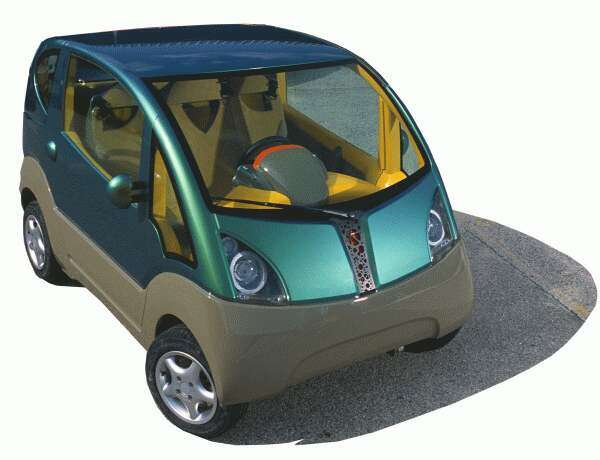
MIT's Technology Review has more on MDI's Air Car.

The Air Car was supposed to hit the streets years ago, but its release always seems just around the corner. MDI announced in 2002 that the cars would be used to replace taxis in Mexico City, but nothing resulted.

Tata's involvement this time around, combined with the fact that oil recently hit $100 a barrel, could change the game. India's largest automaker announced last February that it had struck a deal with MDI to further develop and refine Negre's compressed-air engine technology, with the intention of producing and selling the emission-free cars in India. It has since been reported that Tata invested nearly $30 million in MDI as part of the agreement.

The Review say experts have doubts about the energy efficiency of the compressed air motor.
"The main problem is that air gets hot when you compress it, so much of the energy input goes into raising the temperature of the air as you try to raise the pressure," explains Doug Nelson, a professor of mechanical engineering and an expert on advanced vehicle systems at Virginia Polytechnic Institute.
But, apparently the engine is much more efficient at using energy:
To propel the vehicle, compressed air from the tanks is injected into a small chamber, where it expands and cools. This expansion drives a downstroke of the piston. But as the ambient temperature begins to reheat the air in the first chamber, that air is forced into a second neighboring chamber, where it expands again to drive an upstroke. Using ambient heat helps capture more of the energy in the compressed air, ultimately improving the efficiency and expanding the range of MDI's Air Car. And compared with four-stroke combustion engines, in which half of the strokes are wasted to pull air and fuel into the chamber, the air engine makes use of every stroke.

...Even though one of MDI's compressed-air tanks would carry the energy equivalent of just one gallon of gasoline, the use of that air in the engine is 90 percent efficient.
The first production model will feature a hybrid engine and will sell at more than double the price of the Tata Nano:
The first CAT car to be produced is called the OneCAT, a "utilitarian" car for urban and rural driving that's specifically designed for use in overcongested cities and priced in a range ($5,100 to $7,800) within reach of consumers in a developing economy, such as India.

The ultralight bodies of the vehicles would be made of glued-together fiberglass and injected foam, and the aluminum chassis would also be glued, not welded, to simplify manufacturin


Let's see where this goes...

1.15.2008

air is better


And I don't mean Steve's newest baby.

I'm referring to Guy Nègre's Air Powered Car that apparently just signed a deal with Tata Industries (yes, they of Tata Nano fame) to "explore further development and refinement of the technology, and its application and licensing for India."

Not sure of the corporate-speak but I hope this leads to a production line.

I've covered this before but the specs bear repeating:

"The principle that makes this car work is very simple. Instead of using gas to create an explosion and make the pistons move, the vehicle’s engine is powered via three compressed air tanks located under its chassis. Environmentally speaking, this means all that goes out the exhaust pipe is cold, pure air, which can even be used as an air-conditioning source on a hot summer day.

As far as performance goes, the vehicle is pretty amazing. With a top speed of 110 kilometers per hour, it has autonomy of around 300 kilometers. All that is needed to fill it up is a compressed air station, and in case of emergency, an electrical source can be used to power the built-in air compressor, which can fill in the air reserve in about three hours. The core of the technology is controlled wirelessly via computer and the car’s electrical system is composed of a single wire."

(via groovygreen and geeksaresexy)
Compressed air beats 50 mpg anyday.

1.14.2008

belmonte gets it


Sonny Belmonte gets it and says "cities are the new nations":

Quezon City Mayor Feliciano Belmonte Jr. said the emergence of cities as centers of commerce and economic drivers of their respective countries has provided growing power to local governments, enabling local leaders to increase their influence in state affairs and in national breakthroughs.

“Cities are malleable habitats for life. They can be molded, guided, equipped, strengthened and fine-tuned to achieve goals like employment, innovation and growth,” he said during a symposium organized by the German Federal Intelligence Service Bundesnachrichtendienst, where he was invited as a panelist.
I'm glad to see that Belmonte, Bayani Fernando and Jejomar Binay are on various shortlists for 2010 (thought I'm not too hot on the latter two).

I have no sense of their prospects but it may be a good chance to push forward an urban agenda into the platforms and presidential debates.

1.11.2008

true cost of car ownership


Robin Chase, founder of Zipcar,* had this to say about the Tata Nano.

(I think it's a great argument for moving away from our auto-dominated urban transport paradigm.)

We can think of the cost of a car has having three components (and yes, for those life cycle sticklers, I'm simplifying by ignoring the horrors associated with manufacturing and disposal for this post):

THE CAR: purchase, depreciation, maintenance. In the US, that is about $8k a year. While I imagine maintenance to be significantly cheaper in India than here, I am sure it will be the same unanticipated and underappreciated cost it is here. Americans currently spend 18 percent of their household budgets on their cars, how sad it is to contemplate the effects of that percent of income being taken out of the wages of low-income Indians. And because of the size of these unplanned for maintenance needs, I can also easily imagine that many of these cars will end up very poorly maintained, much like the ubiquitous auto rickshaws that flood Asian cities and are some of the dirtiest vehicles around.

CAR STORAGE: People typically park their cars for “free,” even in dense urban areas where the value of street and sidewalk space is high. This free is dramatically undervalued to the other users of this public space. Just as we saw beautiful squares in European villages being turned into parking lots, and acres and acres of land in American suburbia being paved to accommodate the one peak day a year at the mall, so too we can anticipate that every single possible space in Indian cities, in Indian poor neighborhoods, in Indian village squares, on what few sidewalks there were, will soon be filled with beautiful shiny Nanos. I can see the crowded sidewalk clearing for the Nano that pulls in and parks. The driver walks away and the crowd of pedestrians is left with less space. Gone will be places to play, places for markets, places to walk in narrow old neighborhood streets.

CAR DRIVING: Most people think that the cost of driving is just the cost of gas. In the US, this amounts to about 7% of the total costs that we account for and actually do pay. In India, one can imagine that fuel costs will feel like a heavier burden to those driving the Nanos. But the costs of gas are just a very tiny part of the whole. As we have seen from the wave of cities exploring congestion pricing (unfortunately no Indian cities). Congested roads, jammed past capacity already, will become gridlocked. The scooter that has a family of four on it, will be replaced by the safer-for-the-family Nano that occupies four times the amount of space.
Someone want to work out comparable cost for Philippine households?

Robin continues:
What is to be done? Is it fair to deprive lower-income people the opportunity to travel more conveniently and more safely? No. But we need to make every driver pay the real costs of using a car. Those real costs include market prices for storage; road taxes high enough to adequately maintain them once they’ve been built; congestion pricing as appropriate, and carbon taxes on emissions. More details can be found in my other posting on this subject.

Once driving personal cars becomes appropriately priced, we choose to use them == rather than other modes of travel -- when they are the best value for our need.
"The real cost of driving a car" -which is pretty much what I said when other bloggers argued for a fare increase for the MRT.

If we truly account for all the externalities, improving our public transportation becomes all the more urgent and makes so much more economic sense.

(And yes, that very delayed post about how to build a BRT coalition is coming soon...)

*Full disclosure, I am a very happy Zipcar member.

1.10.2008

tata nano


Tata Motors has unveiled the world's cheapest motor car at India's biggest car show in the capital, Delhi.

The vehicle, called the Tata Nano, will sell for 100,000 rupees or $2,500 (£1,277) and enable those in developing countries to move to four wheels.
Too bad Sarao didn't think of this. Of course, this probably isn't a good thing for cities.

< couldn't resist... >

Tata Nano.

Alternate names:
  1. Tata Kbonalangako
  2. Tata Ndakasabagal
  3. Tata Ntananmoangtraffic
  4. Tata Lisodsababolgam
  5. Tata Nginaangsikip (Pardon my french)
Your suggestions?

1.09.2008

it takes a pink line

Warning: Partly a rant.

This is a gem:

The MMDA will be painting pink lines on EDSA to keep cars from parking on the sidewalks. ("There are sidewalks on EDSA??? Where????")

"Under the scheme, three-inch wide pink lines shall separate the sidewalks from the roadways in an attempt to strictly enforce illegal parking laws."

Er, we need the pink lines to enforce parking laws? Don't we need enforcement to enforce parking laws?

Did they use pavlovian methods to train the MMDA traffic boys so they now only respond to pink?

And you've got to admire the MMDA's keen powers of observation:
"The project was conceived after MMDA officials observed that car owners who do not have their own garage often park their vehicles on sidewalks, blocking the way of pedestrians."

Wow. I had no idea.


< / sarcasm >
<>

  • One, widen the sidewalks. It should be at least 12 feet wide through the whole stretch of EDSA.

  • Two, limit the curb cuts - e.g., driveways and breaks in the curb, to no more than one every 200 feet. And driveways should be no wider than 10 to 12 feet. (Secondary roads should feature curb extensions and other traffic calming measures.)

  • Three, allow parallel parking on segments of EDSA and other major boulevards during off hours (say from 9pm to 6am). This gives vehicle owners a place to park at night -and if you used parking meters (or parking attendants), could be a good revenue source for local governments.

Of course these three suggestions are predicated on a commitment to make a city that is livable and pedestrian friendly.

And if we're going that way, why not redesign the streets completely? You can paint the tree grates pink if you really must have your signature color.


1.08.2008

control


And then, there's this commentary from Jeb Brugmann in yesterday's Globe and Mail.

"The recent violence in Kenya is part of an increasingly chronic condition in a world that is cramming — without effective urban investment, planning and management — into its cities," so says Brugmann. I agree, but then Brugmann goes on:

From Nairobi to Paris, Guangzhou to La Paz, riots and political upheaval have been fuelled by a failure to manage the gold rush-like claims of hundreds of millions of rural, poor people upon the economic opportunities of cities. Though not commonly understood as such, mismanaged urban migrations have been a central part of political revolutions in our world since the 1960s.
The demographic of the young, urban poor and jobless can contribute to civil instability, no argument there. But then Brugmann continues:
This trend began with the American rebellion of black urban migrants from the rural South that gave them political control of U.S. cities in the 1970s and '80s. It has since included the 1979 revolution in Iran, the 1986 "People Power" movement in the Philippines, the 1994 end of apartheid in South Africa, recent gains by Islamic political forces throughout the Middle East, and the "Bolivarian Revolution" of Hugo Chavez in Venezuela in 2000. In each instance, new political power has been discovered and organized in the slums and ghettos of urban migrants.
1986? People-power? Driven by "uncontrolled" urban migration (e.g. -the urban poor)? Really? Brugmann has to go back to his research. 1986 was driven mostly by the middle-class.

You might argue that EDSA-Tres, 2001, could be attributable to the crush of rural-to-urban migration, but not 1986.

But my big question to Mr. Brugman -or to anyone else who argues that "uncontrolled rural to urban migration" is the problem is: can you please point to any example of a "well-managed" rural-to-urban migration?

Anyone? Anyone?


Image credit: Kibera Life!
by rogiro

look ma, no lights

...and no traffic buildup either.

Via boingboing:


Of course it's been sped up. (Notice the pedestrians).

But did you also notice, despite the seeming chaos, that there is no traffic buildup?

Which makes me wonder if Europe's experiment with taking away traffic signs can work even in megacities.

Quick Links

Notable posts on the metro