10.18.2006

help for jack

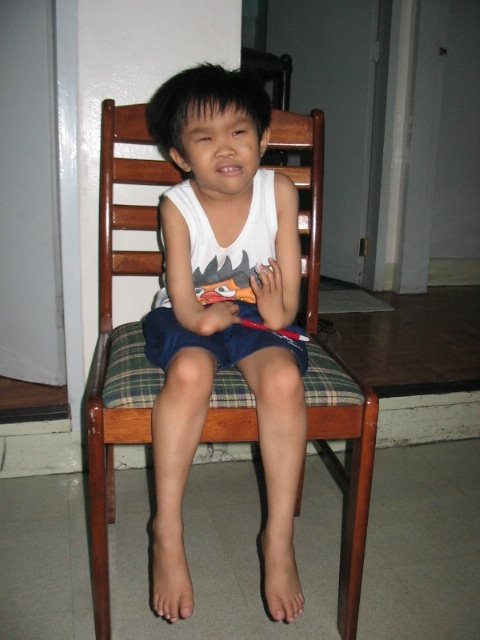
I pause from my (lately infrequent) postings about urban issues to ask for your help for Jack Simbulan. Jack is the five year-old son one of my dear friends and former colleagues in the Ayala Group. He was recently diagnosed with Fanconi Anemia and will require a bone marrow transplant to get a fighting chance against the disease.

Babette and Juni, Jack's parents, have sent out appeals for assistance (medical or financial). The operation alone will cost USD 200,000 not to mention the travel costs of bringing Jack to a competent hospital/center of expertise.

I am reproducing Babette and Juni's letter below that details what Jack has gone through and is going through and includes their contact details. Please get in touch with them if you can help or know of someone or some group that can extend assistance. If you have your own blog, could you please publish this plea -or link to this post- so we can reach more people for Jack? Thank you.


Letter from Babette and Juni Simbulan:

October 18, 2006

We are Babette & Juni Simbulan, residents of the Philippines. We are writing to you in the hopes that you can help us in any way get immediate medical help for our child.

Our first born and only child Joaquin (Jack) A. Simbulan was born on June 11, 2001 with multiple congenital anomalies. He was a pre-term baby (36/40 weeks), delivered via Caesarean section with low birth weight (1.72 kg). He had a PDA ligation when he was eight months old. He also underwent physical/ occupational therapy for two years to improve gross and fine motor movement. He was given a neurodevelopmental evaluation when he was 3.5 years old and was advised regular schooling. He is now 5 years old and attends kindergarten school when his health allows it. Despite his hand deformity, he can make full use of his hands and plays the piano!

In May 2005, he presented with thrombocytopenia and was seen by a hematologist-oncologist Dr. Maria Beatriz Gepte of the Philippine Children's Medical Center. A Bone Marrow Aspiration (BMA) was performed on him but he tested negative for leukemia. A second BMA was performed on him on September 28, 2006 and blood samples are now being tested to confirm Fanconi Anemia (FA). We should have the result within the month.

Since February 2006, Jack has had five hospitalizations due to low platelet and hemoglobin counts. In these hospitalizations, he has received transfusions. We just got back from the hospital where he got a transfusion, October 13-14, and received irradiated platelets and packed RBC since his platelet count has dropped to 23,000. Normal platelet count is from 150,000 up.

Fanconi Anemia, is a rare genetic disease that leads to bone marrow failure (aplastic anemia). It is a recessive disorder: if both parents carry a defect in the same FA gene, each of their children has a 25% chance of inheriting the defective gene from both parents. When this happens, the child will have FA. FA occurs equally in males and females. It is found in all ethnic groups. Though considered primarily a blood disease, it may affect all systems of the body. Many patients eventually develop acute myelogenous leukemia (AML). Patients who live into adulthood are extremely likely to develop head and neck, gynecological, and/or gastrointestinal cancer and at a much earlier age.

Unfortunately for us, FA is also hardly known or understood in the Philippines. We are listed in the international family registry of the FA Research Fund (www.fanconi.org; info_at_fanconi.org) and are in touch with some families in Canada, Australia and the US to better understand this dreadful disease.

Jack has recently been diagnosed with first stage bone marrow failure because of FA. In the meantime, Dr.Gepte plans to give a steroid to stimulate platelet/ hemoglobin production. We were informed that the medium term option is for a Bone Marrow Transplant (BMT). Unfortunately, Jack is an only child, with no potential bone marrow donor from a sibling. Due to the rarity of FA and the fact that very few doctors have experience in treating it in the Philippines, we were also advised that the BMT procedure be done abroad for higher chances of success.

We would like to seek medical treatment abroad and would like Jack to have a fighting chance. However, we are a family of modest means. Over the past five years, we have spent a good part of our savings for Jack's hospitalization and medical care through some insurance which unfortunately is applicable only to Philippine hospitals. We could raise the money for airfare and other preliminary expenses but we are uncertain as to how our family can afford the cost of a BMT. We have initially corresponded with the Cincinnati Children's Hospital which has extensive experience in FA cases. (www.cincinnatichildrens.org/fa) The cost is a staggering 200,000 USD.

It is in this light that we are appealing our son's case. We would like to seek any form of assistance (financial, medical) so that Jack can have a normal childhood and God willing, reach adulthood. The whole extended family is united in looking for organizations or charitable institutions to help our cause. We have faith in the goodness of people.

Thank you very much.


Very truly yours,

Babette A. Simbulan/ Juni S. Simbulan
#54 P. Eleazar St. MBLA Subd
Malanday, Marikina 1805
PHILIPPINES
babette.simbulan_at_manilawater.com
ana_simbulan2003_at_yahoo.com
junisimbulan_at_yahoo.com
Cellphone: 63-917-8574427
Home: 632-9425699


RITA S. SIMBULAN
548 S. Normandie Ave. #1
Los Angeles, CA 90020
Office - (213) 747-5588 Ext. 233 - 9 a.m. to 5:30 p.m., Pacific Time
Cellphone (213) 447-3587
Email: emerald5172_at_yahoo.com or ritasi_at_1stnetusa.com
Office email: rita_at_veniceinvestments.com

10.16.2006

lessons to learn:
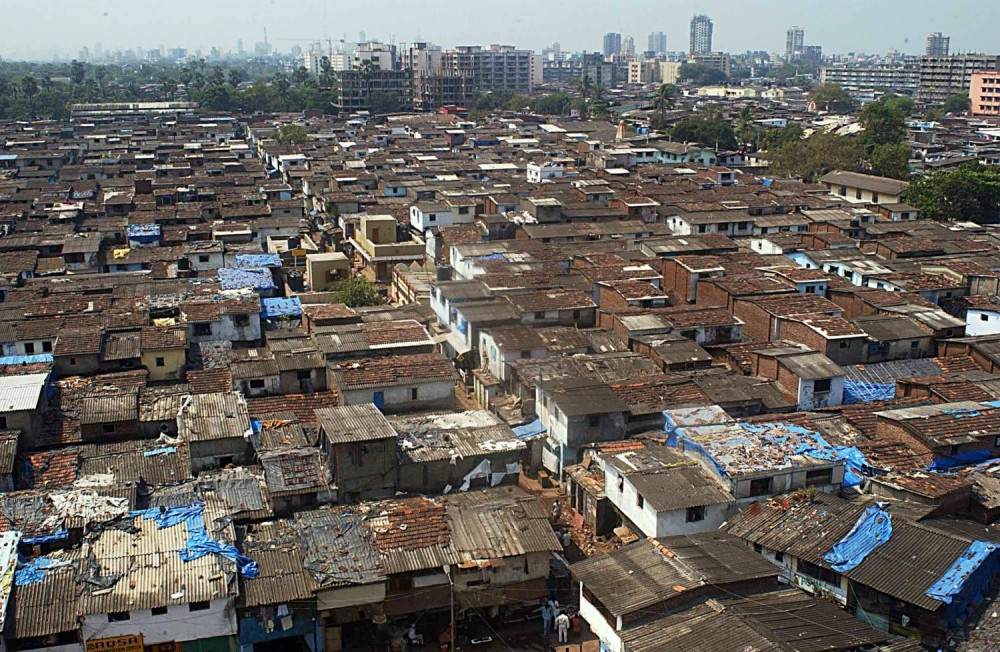
mumbai considers the future of dharavi

I've often said that Metro Manila's problems are not unique. Other megacities around the world face the same challenges. We would do well to learn from their strategies - and see what works.

Here are two articles showcasing the debate between two approaches to dealing with urban slums. The task: improving the life of the 1M people who live in slums of Dharavi in Mumbai:

  1. raze and rebuild
  2. work with the people


Raze and rebuild:

Slums separate Bombay from its future
San Francisco Chronicle
Sudhin Thanawala, Chronicle Foreign Service
Thursday, October 12, 2006


A $2.1 billion dollar plan that "which would raze neighborhood homes and shops. In its place would rise a new town complete with modern apartment buildings, parks, schools, markets, clinics, industrial parks, and even a cricket museum and an arts center."

"With so many people living in slums, we can't take baby steps anymore. Unless we take dramatic leaps, we will not be able to make a difference," said Bombay architect Mukesh Mehta.

Mehta, a former New York real estate developer, has created a seven-year plan to turn Bombay's Dharavi neighborhood -- Asia's largest slum -- into a middle-class area that some experts say could become a model for slum redevelopment in other Indian cities. This former fishing village of about 600,000 residents is a bustling maze of ramshackle homes of corrugated iron and cement, tiny shops and open sewers prone to flooding during the monsoon season...

"What is unique about this plan is its attempt to provide new, on-site housing for such a large number of families," said Vinit Mukhija, assistant professor of urban planning at UCLA...

But critics call the plan simplistic and suspect its real aim is to appropriate land that has become extremely valuable given the slum's proximity to Bombay's domestic and international airports and a new, emerging business district...

Social activists also cite the lack of involvement of slum dwellers in the project.

"Development will be successful if you have a bottom-up approach," said Arputham Jockin, head of the National Slum Dwellers Federation, a community organization that has helped Dharavi's residents build apartments in the past. "But in this project, everything is imposed from the top."


Work with the people.

Finding a better future for Dharavi
Diana Squires for Monash University


While many groups are calling for India's Dharavi slums to be knocked down to make way for new housing, Monash Asia Institute director Professor Marika Vicziany is looking at alternative ways to help the residents.

Monash Asia Institute director Professor Marika Vicziany believes that although the area is chaotic and in need of an overhaul, the solution is not as simple as destroying buildings.

"What we are looking at is if you have one dollar to spend on the area, what would you do with it? Would you put it towards providing a crèche, new buildings or amenities for waste management?" she says.

"We need to be able to provide a list of priorities to the government as well as organisations in the area, which will identify what needs to be done first, based on what residents need most."

Professor Vicziany says her initial reaction to Dharavi was that the buildings should be knocked down to make way for new housing.

But despite the appearance of the slums, she says, the area is full of hard-working people who are extremely house-proud.

"The living conditions look terrible - they are terrible, but when you go inside the homes, they are spotless," she says.

"These people are not hopeless - they are the most energetic people in the city. The women make and sell textiles and food such as papadums. They are not people picking through rubbish - they are a population crammed into a small area, surrounded by filth because there are no private amenities and no roads providing vehicle access to the area."


Image credit: Aerial of Dharavi by Binu Alex from the 4th World Social Forum, World Council of Churches.

10.08.2006

look ma, no more clouds!

Google Earth just updated! Even higher res and much more recent aerials of our favorite megacity. And you can see all of the Ayala CBD now!

Look at how crisp Greenbelt 3 looks. (Click on thumbnail for bigger image.)

(Yes, yes. I owe you chapter 6 of design of democracy!)

(nothing follows)

9.15.2006

breathing earth

"A map of the world showing a real-time simulation of the CO2 emissions level of every country in the world, as well as each countries birth and death rates."

link. via metafilter

(Try comparing our death and birth rates v. our neighbors.)

9.12.2006

design of democracy (5)
notes on the size of v

The standard market paradigm we have for elections is that candidates are the sellers (supply) and the voters are the buyers (demand). Our ideal is that candidates-as-sellers try to get the voters-as-buyers to choose them based on "sellable qualities" -that is: their ideas (electoral platforms and promises), reputation and track record as leaders. What the voters are buying is a promise of good government or good leadership. In essence, the candidates signal the quality of their product -through their campaign communications. (In this post, again, I will use "buy" or "sell" votes in a value neutral sense. It can refer to the selling of and buy-in to ideas or it may actual financial transactions between the parties.)

This is well and good but it assumes that voters-as-buyers have direct information about the sellers. The market paradigm encounters problems in elections that involve a large electorate (v). The size of v creates problems of information asymmetry, particularly in modern societies. Where the candidates and campaigns are armed to the teeth with polling data and sample tested communication strategies, the voter must rely on second hand information (often not even from third party reports) about the candidate. When the voting population reaches into the hundred thousands and into the millions - all information is second hand - filtered -by media, by image managers. (With an electorate size of 50M -the candidate will have to appear to 2 crowds of more than 250K each for everyday of the 90 day campaign period just to make sure every voter sees them in the flesh. Clearly that is unrealistic.)

My contention is that the inherent information asymmetry is so one sided so that we essentially have a market failure. More so, the information asymmetry actually reverses the relationship to: candidates-as-buyers and voters-as-suppliers. (caveat: I am not an economist.)

In contests involving large electorates, the game belongs to the candidate who can assemble the majority (or plurality). The candidate is, in effect, buying votes in bulk volumes, while the voter produces a single widget - their vote. The campaigns basically say "sell your widget to me - I will give you the best value for your widget." From the voter's perspective - the widget maker -the promised payment is better government (or actual financial payoff) if you "sell" to the right bulk buyer

Because the market is so large -there is a need for middle-men -whose job is to aggregate the produce - to assemble the needed volumes of widgets for the buyers who will only buy in bulk. Hence the power of the media, and the campaign professionals and the message shapers and the spinmeisters. They, in essence, aggregate the singular widgets into a majority (or plurality) vote. The vast majority of the widget makers will never meet the bulk buyer in person (they may see them in real life a large rally) but their selection will be based on the pitch given by the various layers of aggregators (the middle men). The malignant side of this condition (the need for aggregators) is vote cheating by volume (i.e. -dagdag bawas).

(The one act given to the widget maker - making a choice between buyers -is further clouded by our synchronized electoral system that makes them choose a president, a vp, 12 senators, a congressman, a provincial governor, several councillors, a mayor, several city or town councillors, etc. )

A large v marginalizes the effect of each individual vote, inverts the economic relationship and gives power to the middle men. It also necessitates a more complex electoral machine: The large v requires multiple layers of counting - multiple layers of safeguards - scaling in complexity the larger the size of the electorate gets.

Next: Effects of a small v

Image credit: "Middle Men" by Clifford Bailey.

9.08.2006

wanted: phil. property tax expert

I know, I know. I owe you the next post on "design of democracy" -it's in the works. But, my day job has gotten really hectic. Plus, since I am an INTP (very strong on the N, strong on the T and the P), I've got so many threads started for this blog.

Here's another one: I want to have a dialogue with someone who is an expert on property/land taxation in the Philippines. I want to explore how our tax system shapes our cities.

If you are one, or you know of someone who would be a good resource, please email me: urbanodelacruz at gmail.

(BTW, it's a bit bizaare to have my blog posts discussed in MLQ's blog instead of here but at least I know i have some readers. And thanks MLQ for the mentions!)

Image credit: Cartoon by Corky Trinidad

9.06.2006

cities for our children

Quick time out from the "design of democracy" series to plug this book:

Creating Better Cities with Children and Youth is a practical manual on how to conceptualize, structure and facilitate the participation of young people in the community development process. It is an important tool for urban planners, municipal officials, community development staff, non-governmental organizations, educators, youth-serving agencies, youth advocates, and others who are involved in the community development process. It offers inspiration to all who believe in the value of community education and empowerment as a fundamental building block of a vibrant and resilient civil society.

Creating Better Cities with Children and Youth
A MANUAL FOR PARTICIPATION
David Driskell
in collaboration with members of the Growing Up in Cities Project
UNESCO PUBLISHING | EARTHSCAN PUBLICATIONS


More about the book -including table of contents here. This from the foreword:

"Children and youth are seldom involved in the construction of their environment. They are considered too inexperienced, too unrealistic, too unqualified. Yet their fresh perspectives may be exactly what is needed to see clearly into the realm of new possibilities. It is my strong conviction that tapping into young people’s ideas and reflections is essential to improving our cities. Creating Better Cities with Children and Youth can help us move in that direction."
More about UNESCO's Growing up in Cities program.

Growing Up in Cities

We live in an urbanizing world, in which more and more children and young people live in cities. In industrialized countries, a half to three-quarters of all children live in urban areas; in the developing world, the majority of children and youth will be urban in the next few decades. Yet across a wide range of indicators, cities are failing to meet the needs of young people and their families.
  • What does the process of urbanization mean in the lives of young people?
  • From young people’s own perspectives, what makes an urban neighborhood a good place in which to grow up?
  • Can cities be positive places for young people-places that support and nurture their development as constructive, contributing members of a civil society?
Growing Up in Cities is a global effort to understand and respond to these and other questions, and to help address the issues affecting urban children and youth. It is a collaborative undertaking of the MOST Programme of UNESCO and interdisciplinary teams of municipal officials, urban professionals, and child advocates around the world, working with young people themselves to create communities that are better places in which to grow up-and therefore, better places for us all.

Enlisting the Creativity and Energy of Children and Youth

Growing Up in Cities enlists the energy, ideas, and hope of young people to evaluate their own circumstances, define priorities, and create change. It also enables municipal governments and child advocates to implement the participation principles of the Habitat Agenda, Agenda 21, and the Convention on the Rights of the Child. It provides models of interdisciplinary, intersectoral collaboration for listening to the voices of young people and creating more responsive urban policies and practices.

9.04.2006

design of democracy (4)
numerator and denominator

LTNE. No comments since last time so either 1) i'm making sense or 2) no one gets it or 3) no one's reading. I'll err on the latter and push on to see where this design exercise leads me.

I left the last post with this key equation:

v/r=c

The numerator (v) is the number of voters. The denominator (r) is the amount of resources a candidate has invested into getting (re)elected. The quotient (c) is the acquisition cost per voter. (OK, for the math purists, we can call them dividend and divisor.)

Jay W. Forrester, used to say that people know intuitively where the leverage points are in a system -and that a lot of attention is put on pushing that leverage point, but often in the wrong direction.

Our electoral system is no exception. We know that overaccumulations of r is detrimental to our system. Our ideal is that candidates stand and are judged on the basis of their ideas or proposal. The reality is, they get elected based on name recall and on meticulously crafted media images.

We have thrown regulation after rule after law to try to corral r -trying to limit it by imposing ceilings on campaign expenses, or trying to balance it by providing government subsidies. We try to wrestle the positive feedback gain so that it doesn't become an advantage. In design terms, we have spent the better part of our energy trying to collar this factor using external controls.

Acting on r -the denominator - is pushing in the wrong direction. What we have not considered is the numerator. We have not considered the size of v nor have we considered managing v to moderate r.

Think about it: our democracy (as all democracies) were designed for much smaller populations. (Athenian democracy ran at the city level.) It did not foresee elections with millions of voters -nor did it comprehend the power of mass media.

If anything, we have let v get away without any controls whatsover. We delineate v not based on population size -but on geography. It doesn't matter whether one district has triple the number of voters of another district -they still both get one representative. The geographic boundaries are totally arbitrary. The district outlines are artificial -and have no grounding on population flows.

We ignore the effects of the size of v in our system to our detriment.

Compare the relative effect of spending P1M vs. P13M* on a campaign with a universe of 50M votes. The cost of acquisition per voter (c) for the candidate spending P1M is 50 -while it is only 4 for the candidate spending P13M. A cost difference of 46M.

But what if v=2,500? The difference in c between a candidate who spent P62,500 vs. a candidate who spent P8M is 0.0397 (corrected thanks to Willy Priles) - that is to say, almost negligible!

Our work should be on the numerator -and the size of the denominator will almost be insignificant. That is to say, work on the size of the voting population and the amount of resources one candidate will have (how much name recall they have or how big their political/social network is) will probably not matter.

NEXT: The advantages of a system built on a low v.

Image credit: Aqui-ali's flickr stream.

*i'm using peso values as stand-ins

8.20.2006

design of democracy (3)
barriers to entry

We have tried to regulate away the positive feedback gain and have failed simply because it is impossible to decouple elected office from the accumulation of power. If the accumulation of power cannot be decoupled from elective office (and I discussed why this was impossible to do in my last post), then this accumulated power becomes a high barrier to entry for would be challengers.

Our democratic ideals say our candidates should be competing for votes based on the ideas they propose (their electoral platform) and their leadership track record (or the level of trust the public places on them). The reality though is that today's media soaked culture rewards high media exposure with high name recall -giving the advantage to candidates who get in the news often (be it political or entertainment news).

Incumbents have the advantage of a high profile job that gives them natural exposure in the news media. This is wholly part of the positive feedback gain. This media exposure along with access to social and political networks presents a high barrier to entry that would be challengers must overcome if they are to be on competitive footing against incumbents.

How do we compute the relative cost of this barrier? What toll does it put on our electoral system?

Investments and pre-investments

Running for an elective position requires resources. The higher the post, the more the resources are needed to get elected to the position. If you are running for president, you are competing for 30M-35M votes, and depending on the size of the field (number of candidates) will need to garner somewhere in the region of 12M to 17M votes. To get elected to the Senate, you will need to garner at least 12M votes. To get elected to the House of Representatives requires anywhere from 25,000 to 200,000 votes (depending on the district) .

You can monetize these voter numbers to see the cost of a campaign (i.e. P1=voter, then you will need P12M minimum to campaign for the senate). This is, at least in theory, relatively easy to do during the actual campaign period. We know of course that campaigning to get elected begins way before the official campaign period and so incumbent politicians who want to get re-elected will devote resources in advance of elections. This is where the comparative advantage - given by the positive feedback gain -comes in.

When the incumbent gets a CDF outlay for her district (and plasters her name all over the project), when she appears in public to give speeches or cut an inaugural ribbon, when she donates to community events, when she appears in the news, or when she glad hands local leaders -she is "pre-investing" resources in getting re-elected. She is also building name recall.

Likewise, a new candidate "invests" in brand creation and name recall when they elevate their public profile (via TV shows, or movies, or appearances in local fiestas, or being cited in the news) so as to get name recall.

Unlike funds spent on a campaign, the pre-campaign "investment" in name recall is nearly impossible to monetize. We need to find a way to measure the relative effect of these investments to see their effect on electoral contests.

Cost of voter acquisition: c as a function of v and r

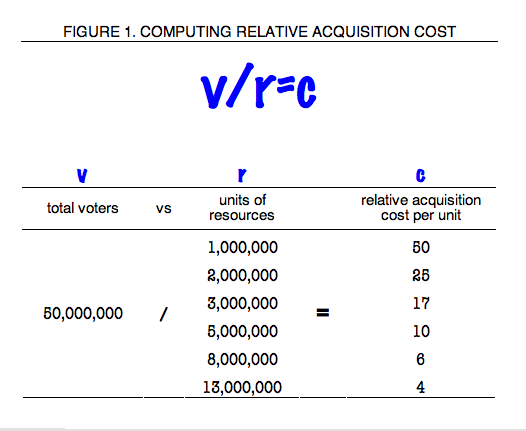
We can attribute a per unit cost (c) to acquiring a voter (i.e. -getting a vote) by expressing it as the ratio of total votes needed (v) vs. total resources expended (r), such that:

v/r=c

The cost of acquisition "c", expressed as a per unit cost, allows us to compute the relative advantage of investing more vs. less resources in an electoral campaign. You can view it as the relative marginal cost of acquiring another vote or the relative "friction" of the system against a candidate. (The lower the number, the lower the marginal cost or the lesser the friction.)

We can use this relative unit "c" to grasp how high the barrier to entry is. It also allows us to illustrate the system dynamic.

Figure 1 (click image for larger view) shows that in a electoral contest over 50 million votes, investing 12M more units gives a candidate a relative advantage of -46c vs. a candidate expending 1M units. In other words, the marginal acquisition cost of another voter is 4c units for a candidate spending 13M, while it is 50c units for a candidate spending only 1M units.

The system dynamic means that (at least in large populations) more "r" gives you a lower "c."

An incumbent, with 4 to 6 years of media exposure along with access to resources and social and political resources, has easily invested huge amounts of "r" giving him a lower "c". The longer an incumbent stays in office, the more "r" is naturally invested in making "c" lower.

The system dynamic drives new candidates to expend a similar magnitude of resources to achieve a competitive "c". It also means that only persons who already have a high "r" have any chance of being considered as candidates. (We know this instinctively and we recognize "dark horse bets" and celebrate the unlikely success of "cinderella" candidates.)

The logic of getting celebrities to run for public office makes total sense given this system dynamic. Because celebrities come with built-in media exposure (read: pre-investment" -not to mention a strong "brand" based on their media typecast), a popular celebrity would have already expended high volumes of "r" which gives the celebrity a lower "c."

Next: Attempts to level the playing field by regulating "r"

8.15.2006

the design of democracy (2)
the positive feedback gain

I've written about this before though we were basically dealing more with rate of replacement of the buffer stock (i.e.-getting new blood into the old congress) in that post.

Today, I will deal directly with the positive feedback gain and how it is impossible decouple this from the accumulation of power.

A few guideposts before we proceed.

  1. I use "positive" in a systemic sense, so I use the term in an amoral dimension. The feedback is "positive" only in that it encourages or amplifies the effect. (If were talking about sound then "positive feedback" would mean feedback that intensifies the volume.) I do not mean that imparts positive values.
  2. I will use the term "cost of each vote" (or "cost per unit" of votes) also without judgement. Cost can mean the actual price of buying a vote (corruption) or the cost of acquiring a voter, or the per capita cost of an electoral campaign (legitimate campaign costs) .
  3. Likewise, I use "resources" (which I will interchange with "power") in an amoral sense -it could mean money, or means, or social connections, or political networks or electoral machinery.

On the POSITIVE FEEDBACK GAIN of power and elections.

The feedback gain (which is also a "loop") works this way: getting elected allows a politician to accumulate power and "resources" (and by that I mean either political power, or wealth, or access to or control of actual physical resources, or access to or control of social networks or political organizations). These resources gives him/her or his/her scions a comparative advantage in the next elections.

The feedback is "positive" in that accumulating more resources gives the politician an even stronger comparative advantage. It is also a "loop" because, successive terms also amplify both the resources and the comparative advantage of the politician.

Attempts to decouple

We intrinsically understand that this accumulation of power, this positive feedback gain, is a threat to our democratic ideals. Democracy assumes a level playing field and we'd like to imagine that every candidate should stand for election (or re-election) on the merits of their worth as leaders. They should not gain undue advantage because their current position gave them access to resources and power that they can leverage in the next electoral contest.

(NOTE: I am personally ambivalent about re-electing incumbents. I think good leaders should get re-elected if they are to continue the good programs they have started.)

We have tried to decouple the positive feedback gain from the power of an elected official mostly by regulations or legislation. We have tried:
  • Imposing term limits -because we understand that the longer a politician stays in power, the more resources he accumulates.
  • Monitoring their wealth by requiring the yearly submission of Statements of Assets and Liabilities (SALs) -because it allows us to guard against the suspicious rapid accumulation of wealth. We regard wealth as a placeholder for an elected official's accumulated power.
  • Outlawing nepotism -to prevent incumbents from strengthening their hold on power via close-in connections in key positions. This is our way of trying to severe the inter-generational "loop" portion of the feedback gain. So, too, our next approach which is:
  • Proposing an anti-dynasty bill -to prevent incumbents from extending their hold on power by using their scions as their patsies and by leveraging their existing power to get their patsies elected. (NOTE: I think the congress will never pass this law as it is patently against their own self-interests.)
By and large, these attempts have failed because political power begets power and by default gives the elected official access to government and extra-government resources.

It is almost impossible to draw the line between the exercise of legitimate political power and the destructive leveraging of influence. Being in office alone gives the incumbent an advantage over any pretenders as the office gives the incumbent more visibility. (More visibility = higher name recall. Being elected gives you an advantage because it raises your public profile and makes you more familiar to the voters.)

We also have to admit that the power we bestow on elected officials is inherent in the job. That's why we elect them in the first place, to give them the political power to produce results for the electorate. They need the power to get things done. The last thing we want is an impotent office and yet it is very difficult to draw a strict line (although we have hundreds of lines in our legal books that attempt to do this) between the execution of office and the leveraging resources to get re-elected.
Example: When an incumbent senator visits a province to consult with the citizens in aid of legislation -does this opportunity for glad handing not give him a comparative advantage the next time those citizens come to the ballot?
The best we have come up with is a rule that prevents the use of public resources 90 days before an election. But, like the example above, campaigning to get re-elected can come in many subtle (read: totally legitimate) forms, even before the campaign period actually starts.

(In its most basic form, this is what the pork barrel is all about. The CDF and special insertions in the budget, allow the incumbents to "invest in their brand" and sell themselves to the electorate ahead of the elections. Hence the preponderance of large billboards attributing credit to the proponents of CDF funded projects. --Building political networks are also part of this early investment of resources.)

Clearly, our attempts to legislate a decoupling of the elected office from power as an advantage, have been largely ineffectual. The positive feedback gain is so inherent in the power of an elected office that incumbents are more likely to get re-elected, no matter how terrible their legislative (or executive) record. Their children are also more likely to be elected to their position -or to other political position. (Past electoral counts will bear this out and this is true not only in the Philippines but in almost all representative democracies.)

Apart from giving incumbents an undue advantage, the positive feedback gain has also raised the barriers to entry to elected positions. New entrants to the political game (no matter how able their leadership track record) must either bring in comparative resources vs their opponents or invest ahead in name recall so as to gain a comparable competitive position to the incumbent. (Which is why celebrities are such good fodder for candidates -they come built in with popularity -i.e., they are already a "brand" that the voters recognize and can stand their ground in the battle for name recall.)

We have also tried to regulate away this increasing costly barrier to entry (a side effect of the positive feedback gain) as another attempt to level the political playing field.

NEXT UP: Barriers to Entry

Image credit to ulibrskr's flickr photostream.

Quick Links

Notable posts on the metro